
World Cup 2026 Records: The Key Numbers
 Available in US
308 goals in 104 matches. 6,810,966 spectators. One goal conceded by the champions across eight games. The first 48-team World Cup did not just add teams and fixtures — it reset a set of records that had stood for decades, and it did so while crowning a champion whose defensive numbers may outlast every other mark from the summer. For the data-first reader, here are the tournament’s key numbers and what each one actually means.
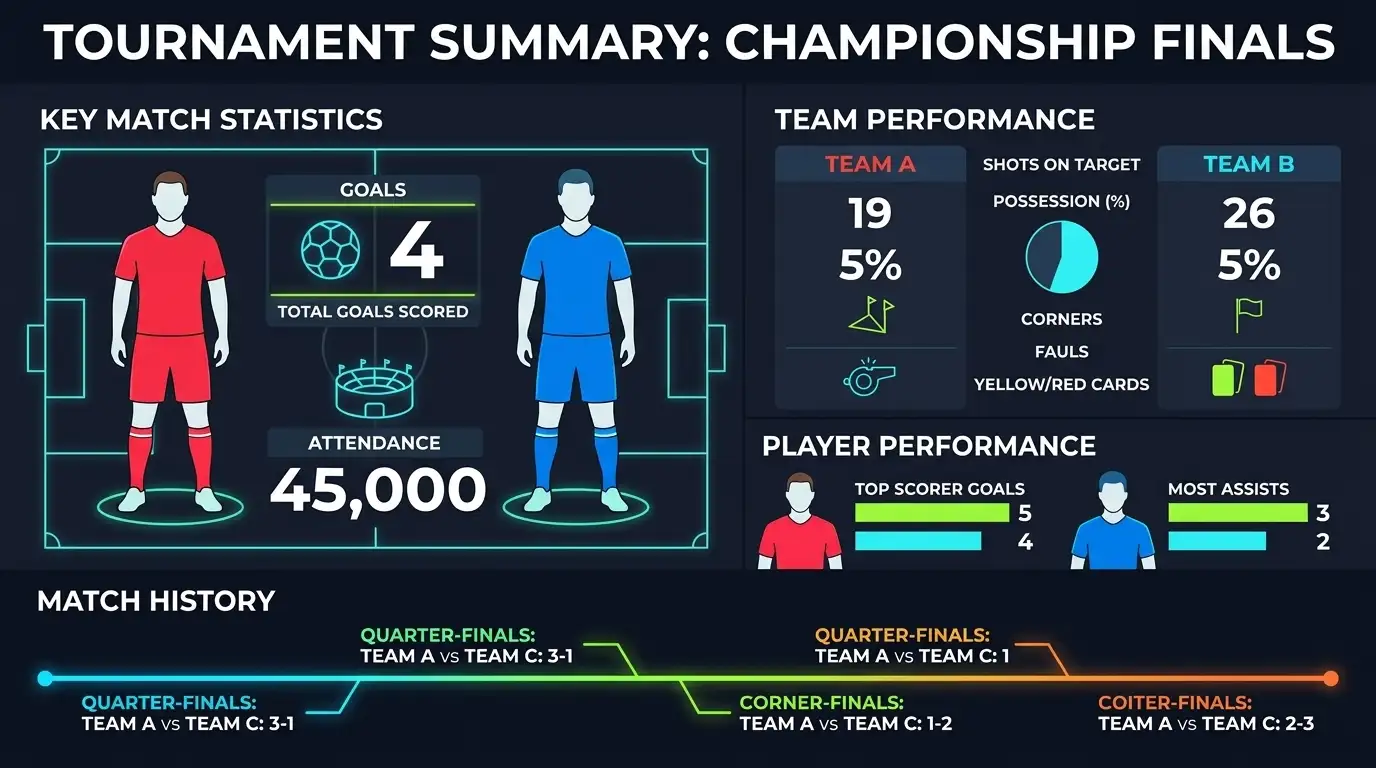
The 2026 edition ran 11 June to 19 July across the United States, Canada and Mexico — 104 matches, the most in World Cup history. The scale reframes the records below: Spain played more games than any previous champion and still conceded less than any of them.
The Tournament Totals
The headline aggregates all pushed past their previous marks:
| Metric | 2026 figure | Note |
|---|---|---|
| Total goals | 308 | Highest-total edition ever; 2.96 goals per match |
| Total attendance | 6,810,966 | All-time record — roughly double 1994’s ~3.59M; avg 65,490 per match |
| Matches | 104 | First 48-team, 104-match World Cup |
| Highest-scoring match | England 6-4 France (bronze final) | 10 goals — most in a single World Cup game since 1982 |
One milestone worth flagging for the record-keepers: the 3,000th goal in World Cup history was scored during the tournament by Enzo Fernández of Argentina.
Spain: A Defence That Rewrote the Book
The champions’ numbers are the ones most likely to stand. Spain conceded just one goal in eight matches — the fewest ever by a World Cup winner, despite the 48-team format forcing more games than any prior champion faced. They kept seven clean sheets, and in the final itself Argentina managed no shot on target across 120 minutes.
Two more Spanish marks landed. The team’s unbeaten run reached 38 matches — a new outright international record, past Italy’s 37. And Rodri finished with roughly 756 completed passes, the most by any player at the tournament, surpassing Xavi’s 599 from 2010.
Unai Simón: Three Records, Kept Separate
Spain’s goalkeeper set overlapping marks that are easy to conflate, so it is worth listing them cleanly:
- 7 clean sheets in the 2026 edition — a 96-year tournament record (the previous best was 5).
- 6 consecutive World Cup clean sheets across tournaments (2022 into 2026) — a first.
- 650 consecutive World Cup minutes without conceding, across tournaments — beating Walter Zenga’s 517.
Mbappé and Messi: The Individual Ledger
The Golden Boot race, covered in full on our award winners page, also settled two all-time records. Kylian Mbappé’s 22 career World Cup goals are now the all-time men’s record, passing Messi’s 21 — reached in 22 World Cup matches, and sealed with his bronze-final brace. Messi, for his part, kept the records he held: most World Cup appearances and most all-time assists (12, past Pelé’s 10). Michael Olise of France set a single-tournament assist record with 7.
Here is the final Golden Boot top of the table:
| # | Player | Nation | Goals |
|---|---|---|---|
| 1 | Kylian Mbappé | France | 10 |
| 2 | Lionel Messi | Argentina | 8 |
| 3= | Erling Haaland | Norway | 7 |
| 3= | Jude Bellingham | England | 7 |
| 5= | Harry Kane | England | 6 |
| 5= | Ousmane Dembélé | France | 6 |
Why the Records Matter to the Board
For bettors, the durable read is that the 48-team format did not dilute quality at the top — it concentrated it. The champion posted a historically strong defensive profile while playing more matches, and the tournament’s goal and attendance totals confirm the expanded event delivered volume without collapsing standards. Those are the priors worth carrying into the next cycle’s futures markets, when the outright winner odds board reopens.
For the final that produced the trophy, see our World Cup 2026 final recap; for Messi’s tournament specifically, our Messi’s last World Cup piece. Canadian readers can track next-cycle markets in decimal/CAD at partner books including BillyBets and ZotaBet.
