
World Cup 2026 Betting Guide: Odds, Predictions & Analysis
 Available in US
For nine years I have tracked international football tournaments across four continents, building statistical models that account for everything from altitude fatigue in Mexico City to travel distance asymmetries that plague European sides competing in North American summers. The 2026 FIFA World Cup represents uncharted territory — 48 nations, 104 matches, and 39 days of action across three host countries. More importantly for those of us in Canada, this tournament features something unprecedented: a home World Cup with Canadian soil hosting matches in Toronto and Vancouver.
This guide distills the numbers that matter, the odds worth watching, and the structural quirks of an expanded format that will reshape how sharp bettors approach soccer's biggest event. Whether you are tracking Canada's Group B chances or hunting value in long-shot markets, consider this your analytical foundation for World Cup 2026 betting.
What Canadian Bettors Need to Know
- Canada's Group B draw against Switzerland, Qatar, and Bosnia represents a realistic path to the Round of 32, with two home matches in Toronto and Vancouver providing measurable advantage.
- The expanded 48-team format creates new betting angles: 8 third-place qualifiers mean even "losing" a group does not end tournament hopes, reshaping outright and qualification markets.
- Spain currently leads outright winner odds around 5.50, with France, England, Argentina, and Brazil completing the top tier below 10.00.
- Ontario's regulated sportsbook market offers licensed options under AGCO oversight, while Alberta's planned 2026 launch may add provincial competition.
- Golden Boot and group winner markets historically offer better value than outright winner bets due to reduced public attention and sharper line movement.
World Cup 2026: The Numbers
Before diving into predictions or odds, let me establish the raw data framework that shapes every analysis in this guide. The 2026 World Cup breaks with 92 years of tournament precedent, and understanding these structural changes is not optional for informed betting.
| Metric | Value | Context |
|---|---|---|
| Participating Nations | 48 | 50% expansion from 32-team format |
| Total Matches | 104 | 40 more than Qatar 2022 |
| Tournament Duration | 39 days | June 11 – July 19, 2026 |
| Group Stage Groups | 12 | 4 teams per group, down from proposed 3 |
| Knockout Qualifiers | 32 | Top 2 + 8 best third-place finishers |
| Host Countries | 3 | USA (78 matches), Mexico (13), Canada (13) |
| Stadiums | 16 | 11 USA, 3 Mexico, 2 Canada |
| Canadian Venues | 2 | BMO Field (Toronto), BC Place (Vancouver) |
| Debutant Nations | 5 | Curaçao, Cape Verde, Uzbekistan, Jordan, Bosnia |
| Defending Champion | Argentina | Seeking back-to-back titles |
The expansion to 48 teams fundamentally alters betting dynamics. With 8 third-place finishers advancing, even groups with dominant favourites offer value in "to qualify" markets rather than winner-take-all scenarios.
From a Canadian perspective, the scheduling matters as much as the numbers. Canada opens against Bosnia and Herzegovina at BMO Field on June 12 — the nation's first home World Cup match in history. That emotional weight translates to betting market distortions I will analyze in detail below. The venue split between Toronto and Vancouver also creates distinct tactical environments: BMO Field's natural grass versus BC Place's artificial turf, outdoor elements versus a retractable roof climate-controlled setting.
Tournament Format & Structure
I remember watching the 2018 World Cup in Russia with fellow analysts, debating whether FIFA would actually follow through on the 48-team expansion. The sceptics argued logistics would kill the plan. Eight years later, here we are — and the format FIFA settled on differs substantially from early proposals that would have featured 16 groups of 3 teams each. That abandoned format would have created scheduling nightmares and collusion risks. The final structure maintains competitive integrity while accommodating 16 additional nations.
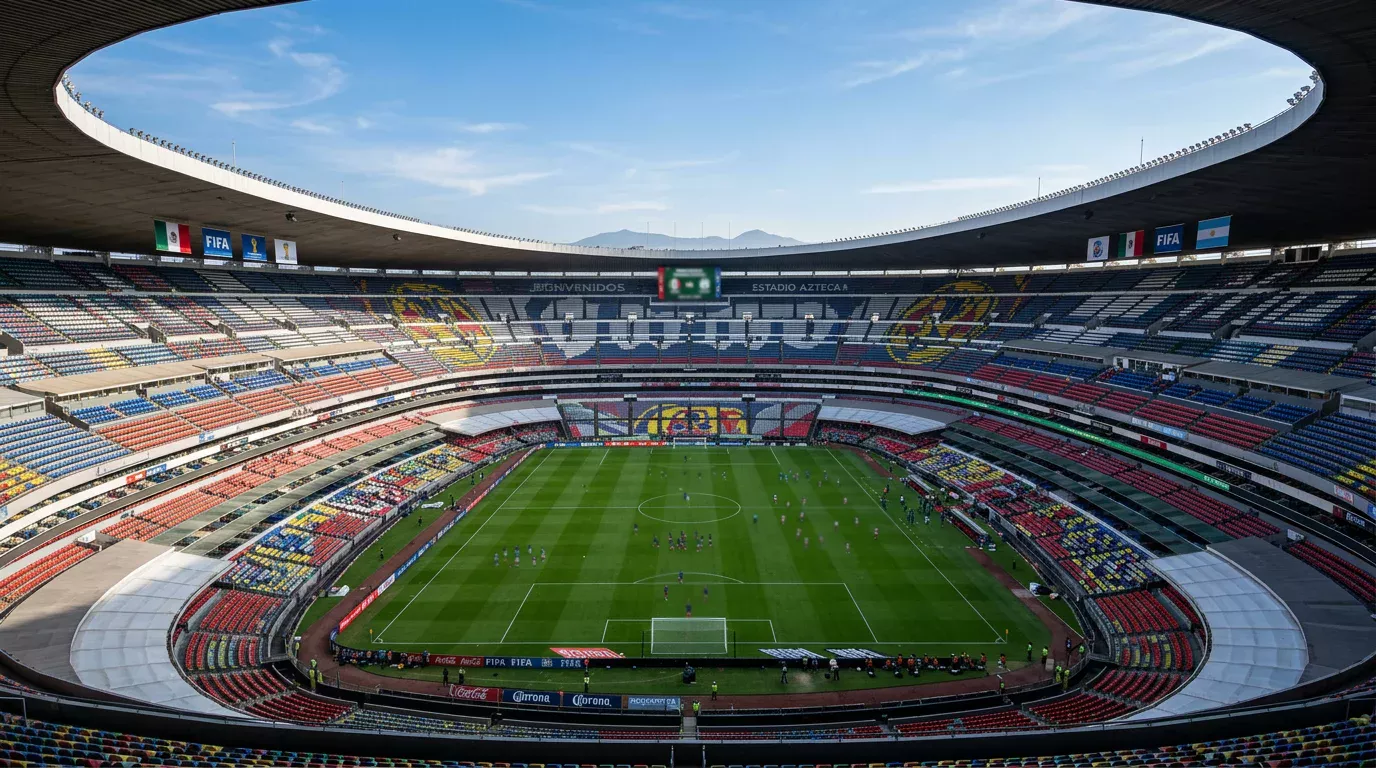
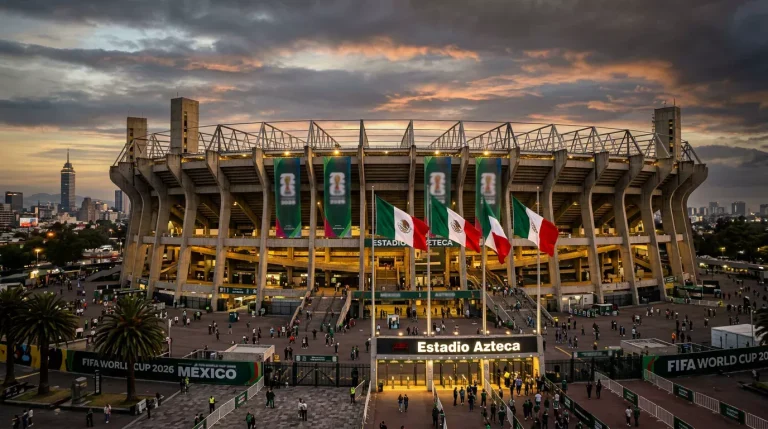
The tournament kicks off June 11, 2026 at Estadio Azteca in Mexico City, where hosts Mexico face South Africa in Group A. The venue itself carries historical weight: Azteca is the only stadium to have hosted two previous World Cup finals (1970 and 1986). That opening match sets the tone for 39 days of competition culminating in the July 19 final at MetLife Stadium in East Rutherford, New Jersey.
Group Stage Mechanics
Twelve groups of four teams each play a round-robin format — three matches per team, identical to the structure used since 1998. What changes is the qualification pathway. The top two finishers from each group advance directly to the Round of 32 (24 teams), joined by the 8 best third-place finishers across all 12 groups.
Third-place advancement was used at Euro 2016 and Euro 2020, where Portugal won the entire tournament in 2016 after finishing third in their group. The precedent suggests backing sides to qualify rather than win their group often delivers better expected value.
This structure matters for betting because it reduces the penalty for losing a single group match. A team could lose to the group favourite, win their other two matches, and still advance comfortably as a second or third-place finisher. Markets pricing "to qualify" at similar levels to "group winner" may be mispricing the actual probability spread.
Knockout Structure
The bracket expands to accommodate 32 teams starting the knockout rounds, adding a Round of 32 before the Round of 16. This creates seven knockout matches for any side reaching the final — compared to four in the previous 32-team format. The stamina and squad depth implications are significant.
| Round | Dates | Matches |
|---|---|---|
| Round of 32 | June 28 – July 4 | 16 |
| Round of 16 | July 4 – 7 | 8 |
| Quarter-finals | July 9 – 11 | 4 |
| Semi-finals | July 14 – 15 | 2 |
| Third-place match | July 18 | 1 |
| Final | July 19 | 1 |
A side that finishes third in their group and advances could play up to 10 matches across 39 days — an unprecedented workload at senior international level. For context, Qatar 2022 champions Argentina played 7 matches over 29 days. The complete betting guide explores how squad depth metrics should inform tournament-long wagering strategies.
Geographic and Logistical Factors
The tri-nation hosting arrangement creates travel asymmetries that affect match outcomes. Teams based in the eastern United States face different rest and recovery dynamics than those shuttling between West Coast venues. Mexico City's 2,240-metre altitude historically impacts European and South American sides unaccustomed to thin air.
For Canadian bettors specifically, the time zone spread deserves attention. Matches will air across ET, CT, MT, and PT depending on venue. Early kick-offs at West Coast venues (11:00 AM PT for a 2:00 PM ET listed time) could affect live betting markets as viewership and bet volume lag.
The structural foundation is set — 48 teams, 104 matches, 39 days. Now let me break down what the current betting markets are actually pricing.
Current Betting Odds Snapshot
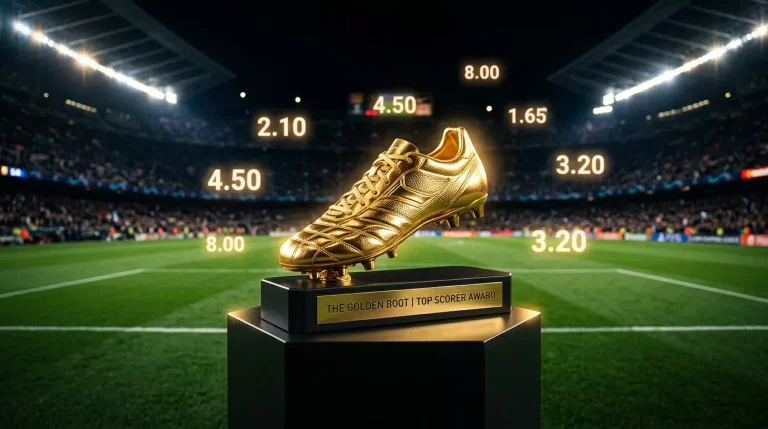

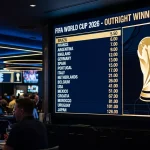

Two weeks before Euro 2024, I watched Spain's odds drift from 7.00 to 9.00 after unconvincing friendlies. They won the tournament. The lesson: pre-tournament odds reflect sentiment as much as probability, and sentiment can be spectacularly wrong. With World Cup 2026 still months away, current odds represent opening positions rather than sharp assessments — which creates opportunities for bettors willing to stake early.
The outright winner market has stabilized into a clear hierarchy, though line movement between now and June will certainly reshape these numbers. I am presenting decimal odds as the Canadian standard, with implied probabilities calculated for context.
Tournament Favourites Tier
| Nation | Odds (Decimal) | Implied Probability | Group |
|---|---|---|---|
| Spain | 5.50 | 18.2% | H |
| France | 6.50 | 15.4% | I |
| England | 7.00 | 14.3% | L |
| Argentina | 8.00 | 12.5% | J |
| Brazil | 9.00 | 11.1% | C |
Spain's position at the top reflects their Euro 2024 triumph and the emergence of a generational midfield featuring players at elite European clubs. France, despite back-to-back World Cup finals in 2018 (win) and 2022 (loss), sit slightly behind — perhaps market scepticism about squad transition or the weight of expectation on their attacking core. England's perpetual "nearly" status keeps them short despite zero major tournament victories since 1966.
Argentina as defending champions merit attention. Historical precedent shows only Italy (1934, 1938) and Brazil (1958, 1962) have won consecutive World Cups. The odds imply roughly 12.5% probability — whether that undervalues or overvalues a side potentially entering with their star player in his final World Cup is a debate I explore in the data-driven predictions section.
Second Tier Contenders
| Nation | Odds (Decimal) | Implied Probability | Group |
|---|---|---|---|
| Germany | 11.00 | 9.1% | E |
| Portugal | 12.00 | 8.3% | K |
| Netherlands | 13.00 | 7.7% | F |
| Belgium | 17.00 | 5.9% | G |
| Italy | 19.00 | 5.3% | Did not qualify |
Wait — Italy appears on this list but did not qualify for the tournament. That illustrates an important market quirk: these odds were captured before qualification finalized, and some sportsbooks maintain dead markets for illustrative purposes. Always verify your selected side actually qualified before placing wagers. Italy, defending European champions in 2021, failed to qualify for back-to-back World Cups after their 2022 playoff defeat to North Macedonia.
Germany's presence at 11.00 reflects market scepticism following group stage exits in 2018 and 2022. Yet they reached the Euro 2024 quarter-finals as hosts, suggesting the rebuild may have progressed further than odds indicate.
Host Nation Odds
| Nation | Odds (Decimal) | Implied Probability | Group |
|---|---|---|---|
| USA | 21.00 | 4.8% | D |
| Mexico | 41.00 | 2.4% | A |
| Canada | 81.00 | 1.2% | B |
The home advantage premium is clearly priced into these markets. USA at 21.00 suggests bookmakers view them as a legitimate dark horse, benefiting from 78 of 104 matches on American soil and a favourable Group D draw featuring Australia, Paraguay, and Türkiye. Mexico at 41.00 reflects their historical Round of 16 ceiling — they have not advanced past that stage since 1986, when they hosted.
Canada at 81.00 translates to roughly 1.2% implied probability of winning the entire tournament. That seems appropriately priced for a nation making only their third World Cup appearance (after 1986 and 2022). More realistic betting opportunities exist in Group B and "to qualify" markets, which I analyze in the comprehensive odds breakdown.
Outright winner markets for 48-team tournaments carry substantial bookmaker margin. The summed implied probabilities across all 48 teams typically exceed 130%, meaning the house edge on these markets runs 20-25%. Consider breaking your World Cup bankroll across multiple market types rather than loading on a single outright bet.
For Canadians using Ontario-licensed sportsbooks, odds on Canadian outcomes often run tighter than international books due to local betting volume. Shopping lines across AGCO-regulated operators can yield 5-10% differences in payout potential for identical wagers — a meaningful edge over 104 matches.
Canada's World Cup Path
The email arrived at 3:47 AM on December 5, 2025. FIFA had completed the draw, and my phone was already buzzing with messages from fellow analysts. Canada had landed in Group B alongside Switzerland, Qatar, and Bosnia and Herzegovina. I ran the numbers before sunrise — and the results were more favourable than I had dared hope. For a nation that endured a 36-year World Cup absence between 1986 and 2022, this draw represents a genuine path to knockout football.
Group B Composition
| Nation | FIFA Ranking | Pot | Recent Tournament |
|---|---|---|---|
| Canada | #29 | 1 (Host) | WC 2022 Group Stage |
| Switzerland | #18 | 2 | Euro 2024 QF |
| Qatar | #56 | 3 | WC 2022 Host (Group Stage) |
| Bosnia & Herzegovina | #71 | 4 | Tournament Debut |
Switzerland presents the clear obstacle. The Swiss reached consecutive European Championship quarter-finals (2020 and 2024) and eliminated France on penalties at Euro 2020. They are tactically sophisticated, defensively organized, and rarely collapse against superior opposition. That said, they also rarely impose themselves on matches — their draws and narrow defeats against top sides suggest vulnerability exists.
Qatar's inclusion might seem daunting given their 2022 host status, but their actual performance tells a different story. They became the first host nation in World Cup history to lose all three group matches, conceding 7 goals while scoring just 1. The squad has experienced minimal turnover since, and their Asian Cup results have been inconsistent. This is likely Canada's most winnable fixture.
Bosnia and Herzegovina enter as tournament debutants after navigating UEFA's treacherous playoff route. They bring genuine attacking threat — their qualification campaign featured victories over Netherlands and Hungary — but lack the tournament experience that steadies sides in high-pressure moments. Canada's opener against Bosnia at BMO Field on June 12 may be the most crucial match of the group.
Canada's Match Schedule
| Date | Opponent | Venue | Time (ET) |
|---|---|---|---|
| June 12, 2026 | Bosnia & Herzegovina | BMO Field, Toronto | 3:00 PM |
| June 18, 2026 | Qatar | BC Place, Vancouver | 6:00 PM |
| June 24, 2026 | Switzerland | BC Place, Vancouver | 3:00 PM |
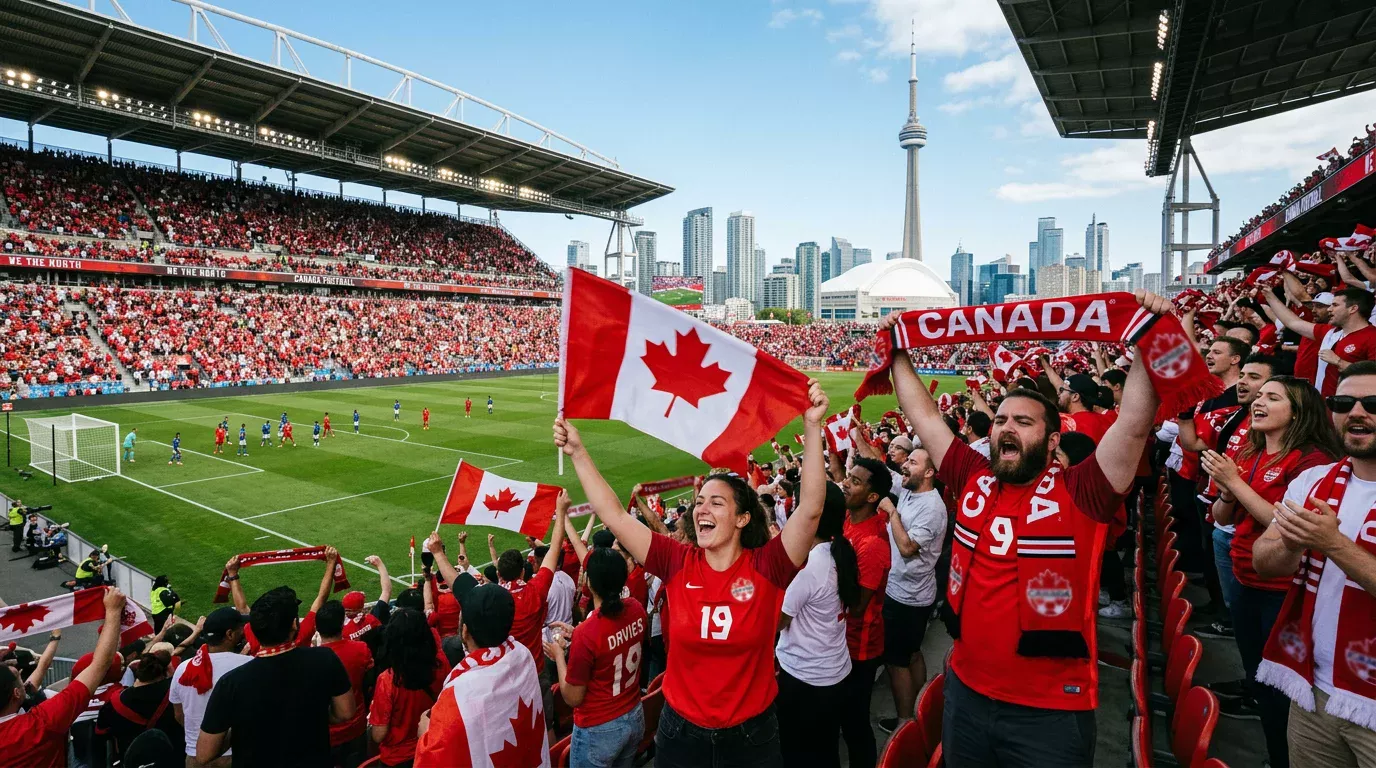
Two of three matches on Canadian soil — that is the structural advantage embedded in this schedule. Home advantage in international football is well-documented, with UEFA research showing approximately a 0.5 goal swing for home sides in competitive matches. The BMO Field opener will feature a crowd of 30,000+ Canadian supporters; BC Place can accommodate over 50,000 under its retractable roof.
Key Players to Monitor
Alphonso Davies (Bayern Munich) remains the tactical fulcrum. His pace on the left flank stretches opposition defences and creates transition opportunities that Canada otherwise lacks against organized sides. His fitness and form entering the tournament will significantly impact betting markets — any injury news between now and June should prompt immediate odds reassessment.
Jonathan David (Lille) provides the goal-scoring threat. His 2024-25 Ligue 1 numbers confirm he can finish at elite levels, and his inclusion in Golden Boot markets reflects bookmaker acknowledgment of his quality. For Canada to advance, David likely needs 2+ group stage goals.
The midfield remains Canada's uncertainty. Tajon Buchanan's versatility helps, but controlling matches against Switzerland's technical midfield will require performances beyond recent CONCACAF competitions. Manager Jesse Marsch's tactical approach — aggressive pressing, quick transitions — suits the Canadian player pool but may expose defensive vulnerabilities against patient opposition.
Realistic Betting Assessment
Let me be direct: Canada winning the World Cup at 81.00 is not a serious proposition. The detailed Canada analysis breaks this down further, but the summary is straightforward — the squad lacks the depth, experience, and individual quality to compete with genuine contenders over seven knockout matches.
What is realistic is Group B advancement. My model assigns Canada approximately 65-70% probability of reaching the Round of 32, whether as group winners, runners-up, or one of the eight best third-place finishers. That probability creates betting value if markets are pricing Canadian qualification below 1.50 (66.7% implied).
Canada has never won a World Cup match. Their 1986 campaign produced three losses: 0-1 to France, 0-2 to Hungary, and 0-2 to Soviet Union. Their 2022 Qatar appearance saw defeats to Belgium (0-1) and Croatia (1-4) alongside a 4-1 loss to Morocco. A single victory in Group B would represent historic progress.
Group B winner odds for Canada typically sit around 3.50, implying 28.6% probability. Given Switzerland's consistent tournament performances, that price seems fair — perhaps slightly overvaluing Canadian home advantage relative to Swiss tactical quality. The sharper play may be Canada to qualify at prices around 1.50-1.65, banking on the third-place safety net that the expanded format provides.
Canada's Group B represents the emotional centre of this tournament for domestic audiences. But the full picture requires understanding all 12 groups — and where value might hide beyond the home nation.
Qualify Gap Engine
Sportsbooks price group winner and to qualify as two separate markets — but both describe the same four teams. Enter the prices and this engine rebuilds the finishing order from the winner market, adds the third-place lifeline, and shows you which of the two markets the book has priced badly.
Prices from your book decimal odds
Eight of twelve third-placed teams reach the Round of 32 — a 67% baseline. Push it higher for a strong group whose third-placer banks points, lower for a group where third place finishes on two or fewer.
The gap book vs model
How the engine gets there
- Strip the margin from the winner market. The four win-group prices are converted to implied probabilities and rescaled to sum to 100%. The leftover is the book's overround on that market.
- Rebuild every finishing order. Those margin-free win probabilities become team strengths in a Plackett–Luce ranking model. All 24 possible finishing orders are enumerated exactly, which yields each team's chance of finishing first, second, third and fourth — not an estimate, a full enumeration.
- Add the lifeline. Qualification probability = P(1st) + P(2nd) + lifeline × P(3rd).
- Normalise the qualify market correctly. This is where most calculators break. In a 48-team format a group sends 2 + lifeline teams through on average — roughly 2.67, not 1. Rescaling the qualify prices to 100% would overstate every team by a third. The engine rescales them to 2.67 instead, which is what exposes the true margin on that market.
- Compare. Model probability against the book's margin-free qualify probability. A positive edge means the book is paying more than the winner market itself implies it should.
The engine reads only the numbers you type. It carries no view on form, injuries or motivation — it audits one market against the other and tells you where the book contradicts itself.
Informational analysis only, not betting advice. Odds move; check live prices before staking. 19+ in most provinces, 18+ in AB, MB and QC. ConnexOntario
All 12 Groups at a Glance



The December 2025 draw in Miami produced exactly what FIFA hoped: dramatic pairings, geographic storylines, and enough competitive balance to sustain betting interest across all 48 group matches. I watched the ceremony live, marking up my probability matrices as each ball dropped. Some groups resolved predictably; others created chaos that will take months for betting markets to properly price.
What follows is a rapid assessment of each group, focusing on betting-relevant insights rather than exhaustive team profiles. For deeper analysis on specific groups, the dedicated groups section provides match-by-match breakdowns.
Group A: Mexico, South Korea, South Africa, Czechia
Mexico opens the tournament at Estadio Azteca against South Africa — a fixture loaded with host pressure and altitude advantage. The Koreans bring Premier League quality through Son Heung-min, while Czechia adds organized European football. Betting angle: Mexico to win the group rarely offers value given public backing, but South Korea to finish second at longer odds reflects their actual capability.
Group B: Canada, Switzerland, Qatar, Bosnia
Covered extensively above. The Swiss are technically superior but Canada's home advantage and Bosnia's inexperience create genuine uncertainty. Qatar's 2022 collapse suggests they are the group's weakest side despite their Pot 3 seeding.
Group C: Brazil, Morocco, Haiti, Scotland
Brazil carry five World Cup titles but have not lifted the trophy since 2002 — their longest drought in tournament history. Morocco's 2022 semi-final run proved African sides can compete at the highest level, and their core remains intact. Scotland brings British passion but limited ceiling; Haiti are outmatched. Betting angle: Morocco to advance as second-place finishers offers value against inflated Brazil expectations.
Group D: USA, Australia, Paraguay, Türkiye
The primary American draw looks navigable. Australia qualified through Asian confederation; Paraguay through South American; Türkiye through European playoffs. None project as genuine threats to USA advancement, though Türkiye's counter-attacking quality could spring an upset. Betting angle: USA to top the group at odds around 1.80-2.00 reflects home advantage premium fairly; value may exist in exact scoreline markets for high-scoring American victories.
Group E: Germany, Ecuador, Ivory Coast, Curaçao
Germany need redemption after consecutive group stage eliminations. Ecuador provide organized South American resistance; Ivory Coast's golden generation remnants still threaten; Curaçao are tournament debutants unlikely to advance. Betting angle: Germany's odds to win the group often exceed 1.50, which undervalues their actual probability given the opposition quality. The market may be overcorrecting for recent failures.
Group F: Netherlands, Japan, Sweden, Tunisia
This is the analytically fascinating group. Netherlands bring European pedigree; Japan shocked Germany and Spain in 2022; Sweden's physicality disrupts technical sides; Tunisia defended resolutely in Qatar. Any three of these four could advance — the third-place safety net makes this group particularly volatile. Betting angle: Japan to top the group at 4.00+ represents undervaluation of their quality.
Group G: Belgium, Iran, Egypt, New Zealand
Belgium's "golden generation" may have missed their window — the 2018 semi-final seems increasingly like the peak rather than a foundation. Egypt bring Mohamed Salah's individual brilliance; Iran impressed in 2022 before controversies overshadowed performance; New Zealand complete the group as Oceania representatives. Betting angle: Belgium's odds may offer value if the market has over-discounted them following Euro 2024 disappointments.
Group H: Spain, Uruguay, Saudi Arabia, Cape Verde
Spain enter as tournament favourites for good reason — their Euro 2024 triumph showcased tactical evolution and squad depth. Uruguay remain perpetual dark horses, historically effective at World Cups despite limited talent pools. Saudi Arabia's shock win over Argentina in 2022 proved one-off magic exists. Cape Verde debut as group underdogs. Betting angle: Spain to win the group at 1.50 or shorter offers poor risk/reward; Spain to win their opener may provide better entry.
Group I: France, Senegal, Iraq, Norway
France navigate a group without major threat — Senegal's AFCON success does not translate to World Cup depth, Iraq return to the tournament after decades, Norway debut with Erling Haaland as their obvious weapon. Betting angle: Haaland to finish as tournament top scorer deserves consideration; Norway's advancement odds around 3.00 undervalue their quality given the third-place pathway.
Group J: Argentina, Algeria, Austria, Jordan
Defending champions Argentina drew a comfortable group. Algeria return to World Cups after missing 2022; Austria bring Bundesliga quality; Jordan debut from Asian qualification. Lionel Messi's potential final World Cup adds narrative weight. Betting angle: Argentina minus handicap or total goals over may offer better value than simple group winner markets.
Group K: Portugal, Colombia, Uzbekistan, DR Congo
Portugal's Cristiano Ronaldo era may finally end at this tournament, though recent performances suggest he remains selectable. Colombia's resurgence under new management produced Copa América final appearance in 2024. Uzbekistan debut from Central Asia; DR Congo represent African potential. Betting angle: Colombia to finish second provides fair value against Portuguese uncertainty.
Group L: England, Croatia, Ghana, Panama
The 2018 semi-final rematch headlines Group L — England and Croatia meet again after Mandžukić's extra-time winner eliminated the English in Russia. Ghana bring physical athleticism; Panama complete the group. This is potentially the tournament's "Group of Death" given England and Croatia's quality. Betting angle: Croatia to beat England in their group match offers value if prices exceed 4.50; Croatia's tournament experience in high-pressure matches is consistently undervalued.
The expanded format's third-place pathway fundamentally changes group stage betting. Traditional "group winner" bets carry higher juice and less certainty. Qualification markets — "Team X to advance" — often provide cleaner value, particularly in balanced groups like F, G, and L.
Key Betting Markets Explained
A colleague once told me that World Cup betting separates recreational punters from serious analysts more than any other event. The reasoning is straightforward: most bettors know just enough about international football to form strong opinions, but not enough to recognize where those opinions diverge from probability. That gap creates value — if you know where to look.
Canadian sportsbooks regulated by AGCO offer extensive World Cup markets across multiple categories. Understanding the mechanics and value distribution of each market type is essential before committing capital.
Outright Winner
The flagship market attracts the most betting volume and carries the highest bookmaker margins. You are selecting a single nation to win all seven knockout matches and claim the trophy. Current favourites like Spain at 5.50 imply roughly 18% probability, but the true probability may be closer to 14-15% once margin is stripped.
For Canadian bettors, outright markets should represent only a small portion of total World Cup bankroll — perhaps 10-20%. The variance is enormous, and even superior selections fail more often than they succeed.
Group Winner and Group Qualification
These markets offer tighter margins and more predictable outcomes. Group winner requires your selection to finish first; group qualification allows second-place (and often third-place) finishes to cash. The expanded format's eight third-place qualifiers make "to qualify" bets particularly attractive in balanced groups.
I find the most exploitable edges here. Public money floods outright markets while group-level betting sees less attention, creating softer lines.
Top Scorer (Golden Boot)
Selecting the tournament's highest goal-scorer carries historical variance that intimidates casual bettors. The 2022 Golden Boot went to Kylian Mbappé with 8 goals — a total that any of a dozen elite forwards could reasonably achieve. This market rewards identifying teams likely to progress deep (more matches = more scoring opportunities) with primary goal-scoring threats.
Current market leaders include Mbappé (France), Erling Haaland (Norway), and Harry Kane (England). The interesting wrinkle is Haaland's team — Norway may not advance beyond the group stage, limiting his match count. Kane on a deep-running England side statistically projects better despite similar quoted odds.
Dead Heat Rules — if multiple players tie for most goals, some sportsbooks divide payouts among tied winners. A 3-way tie at 6 goals means your winning ticket pays one-third of quoted odds. Always verify dead heat policies before backing Golden Boot selections.
Match Betting (Moneyline/1X2)
Individual match betting across 104 World Cup games provides the highest bet volume opportunity. The 1X2 market (Home Win, Draw, Away Win) is standard for soccer, though some Canadian books offer two-way moneyline that excludes draws.
Live betting during matches adds another dimension — odds shift in real-time based on score, red cards, and momentum.
Totals (Over/Under Goals)
Goal totals markets predict combined scoring above or below a line (commonly 2.5 goals). World Cup group stages historically produce more goals than knockout rounds, where conservative tactics dominate. Group stage overs and knockout unders represent a crude but historically profitable approach.
Prop Bets and Specials
Creative markets expand beyond standard formats: first goal-scorer, correct score, both teams to score, tournament total goals, nationality of winner, and countless player-specific props. These carry the highest margins but also the most entertainment value for recreational bettors.
The analytical approach is to identify props where your assessment diverges substantially from market pricing — then bet selectively rather than spraying capital across dozens of low-confidence positions.
Market mechanics established, the question becomes: where does the actual value hide in World Cup 2026 betting?
Early Value Picks & Sleepers
Every tournament produces sides that outperform expectations — and bettors who identified that outperformance early collect substantial returns. Morocco at 2022 World Cup traded around 125.00 pre-tournament; they reached the semi-finals. The question is not whether sleepers exist in the 2026 field. The question is whether current markets have already priced them.
My approach to identifying value combines three factors: quality assessment relative to odds, draw difficulty, and stylistic matchup advantages. What follows are positions worth monitoring as we approach June, understanding that odds will shift between now and kick-off.

Outright Market Sleepers
Japan (29.00-34.00) — The Japanese beat Germany and Spain in 2022 group play before falling to Croatia on penalties. Their core remains intact, European-based players have continued development, and their Group F draw is navigable. At 30.00+, you are getting a semi-finalist capable side at implied probability under 3.5%. The value exists.
Morocco (26.00-31.00) — Lightning does strike twice. The 2022 semi-finalists retained their defensive core and added attacking options. Group C alongside Brazil is challenging, but Morocco have demonstrated they can compete with elite opposition. Their Africa Cup of Nations results since 2022 suggest the run was not a fluke.
USA (19.00-23.00) — Host nation advantage should not be underestimated. South Korea/Japan 2002 saw co-hosts reach semi-finals (Korea) and Round of 16 (Japan). The American squad features Premier League and European league starters, and 78 matches on home soil create genuine path dependency advantages. At 20.00+, the market may be discounting host magic.
Group Stage Value
Canada to qualify from Group B (1.50-1.65) — Home matches, favourable draw, and third-place safety net create a realistic 65-70% qualification probability. If you can find this below 1.55, take it. The emotional narrative will drive Canadian markets tighter as June approaches — early positions capture better value.
Japan to win Group F (4.00-4.50) — Netherlands are quality but ageing; Sweden and Tunisia lack ceiling. Japan's 2022 upset victories were not accidents. At 4.00+, backing them to top a winnable group offers asymmetric returns.
Norway to advance from Group I (2.50-3.00) — Erling Haaland exists. France will likely win the group, but second place is genuinely competitive between Norway, Senegal, and Iraq. At 2.50+, Norway's Premier League spine provides edge over less-heralded opposition.
Golden Boot Value
Harry Kane (10.00-12.00) — England's penalty specialist, set-piece target, and primary creator projects more goals than Haaland (Norway's limited advancement ceiling) or Mbappé (recent goal-scoring form inconsistent). If England reach the semi-finals or final, Kane accumulates 5-7 matches of scoring opportunities.
Value betting is about price, not prediction. Backing Japan or Morocco at 30.00 does not mean I expect them to win — it means I believe their probability exceeds the 3.3% implied by those odds. Over a portfolio of bets, that edge compounds.
Mark these positions and track line movement — the best prices often appear months before tournaments, not days.
Your 39-Day Betting Calendar Starts Here
The World Cup 2026 betting landscape will evolve substantially between now and June 11. Injuries, form shifts, and late-breaking news will reshape markets that currently price in limited information. My approach over the coming months involves monitoring a watchlist of value positions, staking early where prices exceed fair probability, and reserving substantial bankroll for in-tournament opportunities as information crystallizes.
For Canadian bettors, this tournament carries emotional weight beyond typical sporting events. Our national team plays at home for the first time in World Cup history. That narrative will drive public money toward Canadian markets, potentially creating value on opposing sides. Remaining analytical rather than patriotic in betting decisions — while perhaps emotionally difficult — protects bankroll.
The structural guides linked throughout this page provide depth on specific topics: complete betting mechanics, comprehensive odds breakdowns, all 48 team profiles, and tournament predictions. Use them as the tournament approaches.
Between now and kick-off, I will update odds snapshots and value assessments as markets move. World Cup betting rewards patience, discipline, and willingness to stake when probability diverges from price. The 104-match schedule provides ample opportunity — no single bet defines your tournament. Spread risk, target value, and enjoy what promises to be the most significant World Cup in North American football history.
Frequently Asked Questions
Is sports betting legal in Canada for World Cup 2026?
Yes. Bill C-218, passed in August 2021, legalized single-game sports betting across Canada at the provincial level. Ontario operates an open regulated market through AGCO (Alcohol and Gaming Commission of Ontario) with dozens of licensed sportsbooks. Other provinces regulate through provincial lottery corporations — BCLC in British Columbia, AGLC in Alberta, Loto-Québec in Quebec. Alberta is expected to launch a competitive private market similar to Ontario before the 2026 tournament. All licensed operators are legal for residents of their respective provinces.
What odds format do Canadian sportsbooks use?
Decimal odds are the default format across Canadian sportsbooks and provincial lottery platforms. A decimal odd of 3.50 means a winning CAD $100 bet returns CAD $350 total (your stake plus CAD $250 profit). American odds appear on some platforms, particularly those operated by US-based companies like DraftKings and FanDuel in Ontario — these display as positive or negative numbers indicating profit on CAD $100 stake or stake required to profit CAD $100 respectively. Most platforms allow users to toggle between formats in account settings.
How many teams qualify for the World Cup 2026 knockout rounds?
Thirty-two teams advance to the knockout rounds from the 48-team group stage. The top two finishers from each of the 12 groups qualify automatically (24 teams), joined by the 8 best third-place finishers across all groups. This format increases the probability of any individual team advancing compared to previous 32-team tournaments, which affects betting value calculations significantly.
Where will Canada play their World Cup 2026 matches?
Canada plays all three group stage matches on home soil. Their opener against Bosnia and Herzegovina takes place at BMO Field in Toronto on June 12, 2026. The remaining two group matches — against Qatar and Switzerland — are scheduled at BC Place in Vancouver on June 18 and June 24 respectively. If Canada advances to knockout rounds, subsequent matches would be played at various venues across the three host countries based on bracket position.
What is the best betting market for World Cup 2026 value?
Golden Boot and group winner markets historically offer better value than outright winner bets. Outright markets carry the highest bookmaker margins (often 20-25% overround across all 48 teams), while group-level and player-specific markets see less public money and tighter lines. Group qualification bets — "Team X to advance" — provide cleaner value in the expanded format where eight third-place finishers also qualify. Match betting across 104 games provides the largest opportunity volume for bettors seeking frequent action.
Who are the betting favourites to win World Cup 2026?
As of current markets, Spain leads at approximately 5.50 decimal odds following their Euro 2024 triumph. France sits second around 6.50, with England at 7.00, Argentina (defending champions) at 8.00, and Brazil at 9.00 completing the top five. Germany, Portugal, and Netherlands occupy the second tier between 11.00 and 15.00. Host nations are priced at USA 21.00, Mexico 41.00, and Canada 81.00 — reflecting both their quality levels and home advantage considerations.
When does World Cup 2026 start and end?
The tournament runs 39 days from June 11 to July 19, 2026. The opening match features hosts Mexico against South Africa at Estadio Azteca in Mexico City. Canada's first match is June 12 against Bosnia and Herzegovina in Toronto. The group stage concludes June 28, knockout rounds span June 28 through July 18, and the final takes place July 19 at MetLife Stadium in East Rutherford, New Jersey.
