
World Cup 2026 Stadiums: All 16 Venues Across North America
 Available in US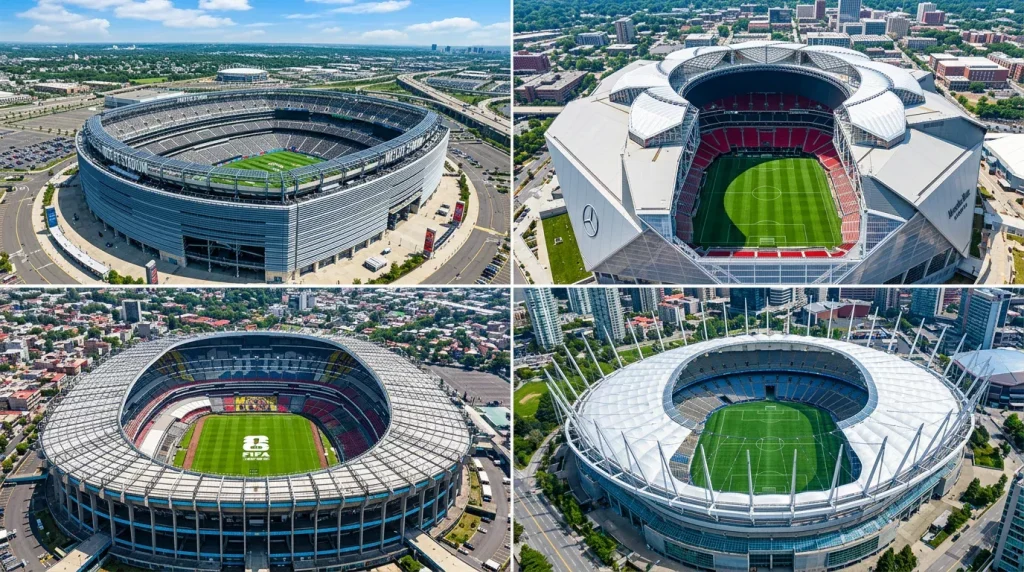
Sixteen stadiums spanning three nations and eight time zones will host football’s greatest tournament. From the opening whistle at Estadio Azteca in Mexico City to the final at MetLife Stadium outside New York, World Cup 2026 unfolds across venues that collectively seat over 1.2 million spectators. The geographic scope creates logistical challenges unlike any previous World Cup — but also opportunities. Understanding venue characteristics matters for betting analysis: altitude affects performance, climate influences match tempo, and travel distances create fatigue factors that bookmakers inconsistently price. After attending matches at nine of these venues over the past decade, I’ve assembled this comprehensive guide to every World Cup 2026 stadium with particular attention to factors that affect match outcomes and betting markets.
Venue Statistics
The numbers reveal unprecedented scale. Combined seating capacity exceeds 1.2 million across 16 venues. MetLife Stadium (82,500) hosts the final; Estadio Azteca (87,000) opens the tournament. The smallest venue, BC Place in Vancouver (54,500), still exceeds most European stadium capacities. Average capacity sits around 70,000 — World Cup matches will fill these venues with atmosphere unmatched by any other sporting event.
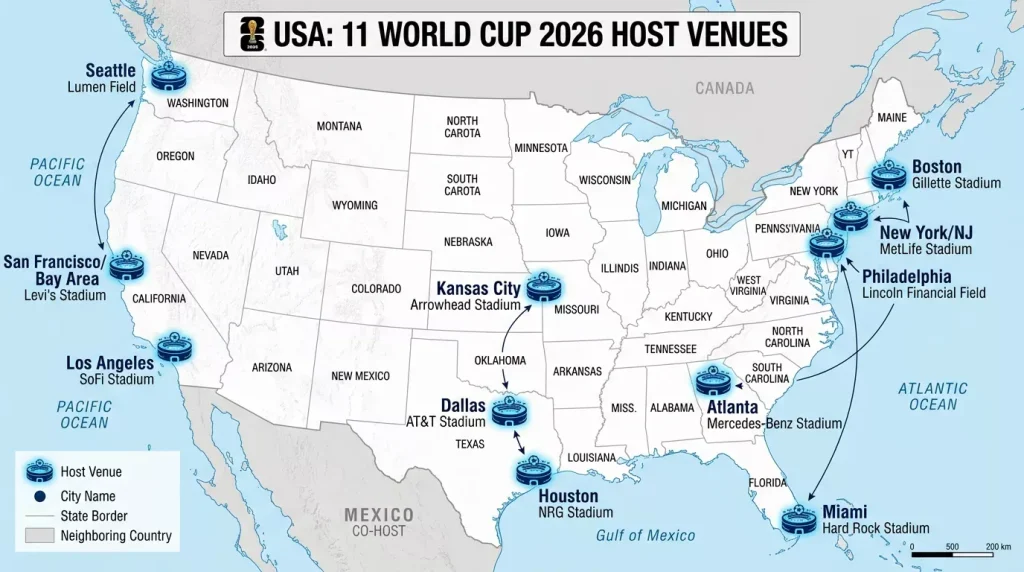
Geographic distribution favours the United States: 11 venues hosting 78 matches (75% of tournament). Mexico contributes 3 venues for 13 matches. Canada hosts 13 matches at 2 venues — but those 13 matches include all three Canada group stage fixtures, creating concentrated home advantage for the co-hosts. The western-most venue (SoFi Stadium, Los Angeles) and eastern-most venue (MetLife Stadium, New Jersey) span approximately 4,000 kilometres; the northernmost (BC Place, Vancouver) and southernmost (Estadio Azteca, Mexico City) add another 4,500 kilometres. Teams may travel more distance during this World Cup than any previous edition.
Altitude varies dramatically. Mexico City’s Azteca sits at 2,200 metres above sea level; Miami’s Hard Rock Stadium lies at sea level. This 2,200-metre difference affects player physiology, ball flight, and match tempo in ways that casual observers underestimate. Betting markets occasionally misprice altitude impact — especially for teams unfamiliar with high-altitude conditions facing Mexican venues.
USA Stadiums: 11 Venues Hosting 78 Matches
America’s infrastructure dominance delivers the tournament’s largest share. These 11 venues span coast to coast, from Pacific time zone kickoffs to Eastern prime-time finals. Each carries characteristics that influence match dynamics.
MetLife Stadium (East Rutherford, New Jersey)
The final venue. MetLife Stadium’s 82,500 capacity will host football’s biggest match on July 19, 2026. Located in the New York metropolitan area — technically New Jersey but functionally serving the world’s media capital — the stadium offers NFL-standard facilities adapted for soccer. The open-air design creates weather exposure; July humidity in the northeast affects player endurance during evening matches, though the final’s late kickoff minimizes heat impact.
Eight matches total including the final, one semifinal, Round of 16, and group stage fixtures. The venue’s infrastructure handles major events seamlessly; Super Bowls and international soccer friendlies have tested operations repeatedly. For betting purposes, the final venue’s characteristics matter less than participant quality — but neutral site conditions favour neither finalist, eliminating home advantage as a variable in championship match pricing.
The New York metropolitan area’s diverse population ensures passionate support regardless of finalists. Large immigrant communities from virtually every World Cup nation create authentic atmosphere for whatever matchup emerges. Media coverage concentrates naturally given New York’s status as global broadcasting centre — the final will receive production quality unmatched elsewhere in North America.
SoFi Stadium (Los Angeles, California)
Hollywood’s venue. SoFi Stadium (70,240 capacity) features a distinctive curved roof design that creates partial shade without full enclosure. The Los Angeles climate promises pleasant June-July conditions without extreme heat. As a newer venue (opened 2020), sight lines and pitch quality meet modern standards. Six matches including a semifinal, quarterfinal, and multiple group stage fixtures. The Pacific time zone creates early morning kickoffs for European viewers — potentially affecting broadcast revenue prioritization in match scheduling.
AT&T Stadium (Dallas, Texas)
The retractable roof monster. AT&T Stadium’s 80,000 capacity and iconic video board create spectacular atmosphere. The fully enclosed option protects against Texas summer heat — essential for player welfare when external temperatures exceed 35°C. Nine matches including a semifinal. Dallas’s central location reduces extreme travel for teams based on either coast, potentially benefiting squads assigned multiple fixtures here.
Hard Rock Stadium (Miami, Florida)
Tropical football. Hard Rock Stadium (65,000) sits in South Florida’s humid subtropical climate. July matches will feature high humidity that European and high-altitude teams struggle with. The partial canopy provides shade but doesn’t eliminate heat effects. Seven matches including a quarterfinal. Latin American teams accustomed to similar conditions may hold subtle advantages over northern European sides in this venue.
NRG Stadium (Houston, Texas)
Another retractable roof venue. NRG Stadium (72,000) offers climate control essential for Houston’s summer humidity. The venue’s experience hosting international soccer (multiple CONCACAF events, friendlies) ensures operational competence. Six matches. Houston’s large Hispanic population guarantees passionate support for Mexico, Central American, and South American teams — creating pseudo-home atmospheres for certain matchups.
Mercedes-Benz Stadium (Atlanta, Georgia)
Architectural marvel. Atlanta’s venue (71,000) features a distinctive retractable roof that opens like a camera aperture. The enclosed option creates controlled conditions; the pitch quality has proven excellent for soccer events since opening in 2017. Six matches including a quarterfinal. Atlanta’s position as a major hub reduces travel complications for teams flying between fixtures.
Lumen Field (Seattle, Washington)
Pacific Northwest passion. Seattle’s Lumen Field (69,000) benefits from moderate summer temperatures and a supporter culture that ranks among America’s most intense. The Sounders’ consistent MLS success created infrastructure and fan expectations that translate to World Cup quality. Five matches. Seattle’s proximity to Vancouver creates logical scheduling possibilities for teams playing fixtures in both Canadian and Pacific Northwest American venues.
Levi’s Stadium (Santa Clara, California)
Silicon Valley’s stage. Levi’s Stadium (68,500) sits in the San Francisco Bay Area with pleasant summer climate and tech industry economic base. The open-air design suits California’s mild evenings. Six matches. The venue’s experience with major events (Super Bowls, Copa América) ensures operational readiness.
Lincoln Financial Field (Philadelphia, Pennsylvania)
Historic East Coast. Philadelphia’s venue (69,000) brings passionate supporter culture and manageable summer weather. The city’s soccer history and diverse population create enthusiastic crowds for international competition. Five matches. Lincoln Financial Field’s proximity to New York creates scheduling efficiency for teams playing multiple East Coast fixtures.
Gillette Stadium (Foxborough, Massachusetts)
New England representation. Gillette Stadium (65,000) serves the Boston metropolitan area with experienced event management. Summer conditions in Massachusetts vary between pleasant and humid depending on weather patterns. Five matches. The venue’s distance from other hosts may create travel challenges for teams assigned Foxborough fixtures combined with West Coast matches.
GEHA Field at Arrowhead Stadium (Kansas City, Missouri)
Midwest heartland. Arrowhead’s legendary atmosphere (76,000) — among the loudest in American sports — translates to electric World Cup crowds. Kansas City’s central location provides geographic balance between coasts. Summer heat and humidity require attention for afternoon matches. Four matches. The venue’s NFL pedigree ensures infrastructure quality; soccer-specific adaptations should meet World Cup standards.
Mexico Stadiums: 3 Venues Hosting 13 Matches
Mexico’s three venues carry historical weight and atmospheric intensity unmatched in North America. These stadiums have hosted World Cup matches before; their experience shows in every operational detail.
Estadio Azteca (Mexico City)
The cathedral. Estadio Azteca (87,000) has hosted two World Cup finals (1970, 1986), witnessed Maradona’s Hand of God and Goal of the Century, and remains Latin America’s most iconic football venue. No stadium in the Western Hemisphere carries equivalent historical weight. The atmosphere for Mexico matches at Azteca creates conditions visiting teams find overwhelming — 87,000 passionate supporters united in El Tri support produces noise levels that disrupt opponent communication.
The altitude (2,200 metres) affects visiting teams physically — reduced oxygen availability decreases endurance, while thinner air causes the ball to travel faster and dip less on shots. Players unaccustomed to altitude describe symptoms resembling mild illness: shortness of breath, headaches, reduced recovery between exertions. These effects diminish with acclimatization but never fully disappear for visitors. Goalkeepers face particular challenges as shot trajectories behave differently than at sea level; central defenders must adjust positioning as long passes carry further.
Azteca hosts the tournament opener: Mexico versus South Africa on June 11, 2026. This scheduling choice honours Mexican football culture while immediately testing visiting nations with altitude challenge. Group A matches at Azteca carry significant home advantage beyond typical host nation benefits.
For betting analysis, altitude creates measurable impact. Teams from low-altitude nations historically underperform at Azteca until acclimatization (minimum 5-7 days at altitude). European and African coastal nations facing Mexican venues without adequate preparation time become fade candidates. The market occasionally underprices altitude effects when focusing on FIFA rankings or recent form without environmental adjustment.
Estadio BBVA (Monterrey)
Northern industrial powerhouse. Monterrey’s Estadio BBVA (53,500) opened in 2015 with modern amenities and excellent sight lines. The altitude (540 metres) presents minimal physiological challenge compared to Mexico City. Summer temperatures in Monterrey reach extreme highs; evening matches avoid the worst heat but humidity persists. Three matches plus potential knockout fixtures. The venue’s location near the US-Mexico border creates travel efficiency for teams moving between Texas venues and Mexican fixtures.
Estadio Akron (Guadalajara)
Chivas’ home. Estadio Akron (49,850) in Guadalajara offers moderate altitude (1,500 metres) and dedicated soccer design. The venue’s experience hosting Liga MX and international matches ensures operational competence. Four matches. Guadalajara’s position between Mexico City and the Pacific coast provides geographic balance within Mexican hosting duties.
Canada Stadiums: BMO Field and BC Place
Two venues. Thirteen matches. All three Canada group stage fixtures. The Canadian hosting allocation concentrates impact where it matters most for local supporters and bettors: ensuring home advantage for the national team’s most important matches in 36 years.
BMO Field (Toronto)
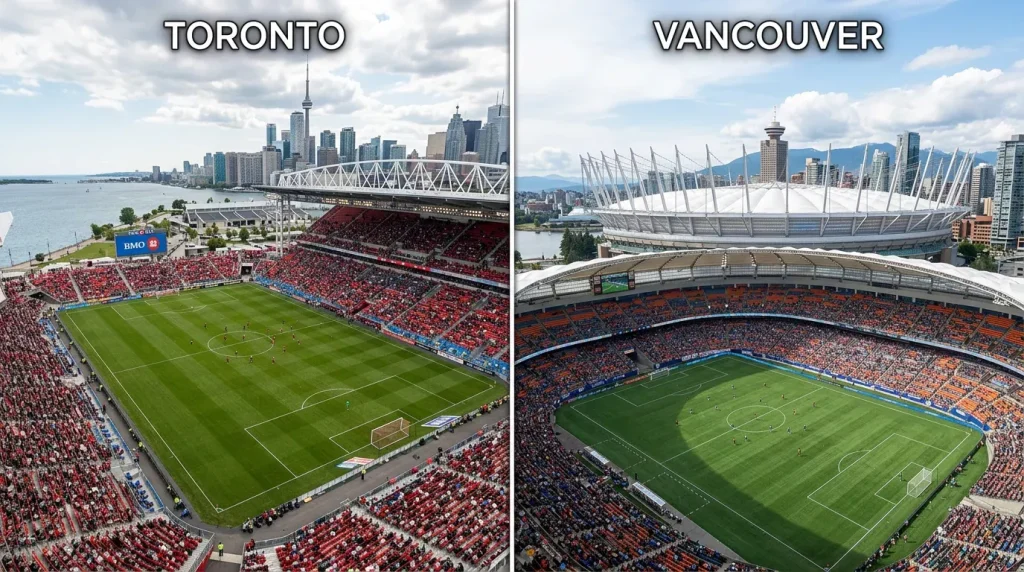
Canada’s football home. BMO Field’s intimate 30,000 capacity expands to approximately 45,000 for World Cup configuration through temporary seating additions. Toronto FC’s MLS success since 2017 (MLS Cup champion) built supporter culture that transfers to national team events. The Voyageurs — Canada’s organized supporter group — create atmosphere rivaling European ultras despite North American sporting context. The venue’s downtown-adjacent location on the Exhibition Place grounds creates accessible atmosphere; fans arriving via public transit fill surrounding areas with pre-match energy.
The grass pitch quality meets international standards after years of professional soccer maintenance. Unlike some MLS stadiums with artificial turf, BMO Field’s natural surface ensures player comfort and traditional ball behavior. The open-air design exposes matches to Toronto weather; June conditions typically range from pleasant to humid without extreme heat that affects Gulf Coast American venues.
Canada’s opening match against Bosnia and Herzegovina (June 12) at BMO Field carries enormous emotional weight. The first World Cup match on Canadian soil since 1986 creates atmosphere that visiting debutants must overcome. Bosnian players facing 45,000 hostile supporters in their first-ever World Cup match face psychological pressure beyond the football challenge. Complete BMO Field analysis details match assignments and venue specifics for all Toronto fixtures.
Betting implications centre on home advantage quantification. Historical World Cup data suggests home nations win 55-60% of group matches; Canada’s intense supporter culture potentially pushes this higher for fixtures against lower-ranked opponents like Bosnia and Herzegovina and Qatar. The market may underprice Canadian home advantage by treating it equivalently to USA or Mexico home venues — but Canada’s 36-year absence and emotional significance create atmosphere beyond typical host nation matches.
BC Place (Vancouver)
Retractable roof flexibility. BC Place’s 54,500 capacity and fully retractable roof create controlled conditions regardless of Pacific Northwest weather. The venue’s experience hosting major events (Grey Cups, Women’s World Cup 2015, numerous concerts) ensures operational excellence. Vancouver’s diverse population guarantees sold-out crowds with passionate support.
Canada plays two group matches at BC Place: Qatar (June 18) and Switzerland (June 24). The latter match likely determines Group B winner; Swiss visitors face a cauldron of Canadian support without the altitude challenges of Mexican venues or the humidity of American Gulf Coast stadiums. The controlled environment theoretically neutralizes weather advantages — but atmospheric intensity from 54,000 Canadians cannot be climate-controlled.
Vancouver’s time zone (Pacific, UTC-8) creates scheduling considerations. Evening matches start at reasonable North American times but occur during European night — potentially reducing broadcast prioritization for fixtures involving primarily CONCACAF teams. Canada’s matches will be scheduled for local prime time regardless, maximizing home audience advantage.
Where the Big Matches Happen
Tournament prestige matches receive venue assignments based on capacity, infrastructure, and time zone considerations. Understanding these assignments reveals FIFA’s prioritization and creates scheduling insights for bettors tracking team travel and fixture density.
Opening Match
Estadio Azteca hosts Mexico versus South Africa on June 11, 2026. The venue’s historical significance (two prior World Cup finals, iconic moments across decades) creates narrative weight for the tournament opener. Mexico City’s altitude immediately tests South African preparation; the passionate crowd creates atmosphere unmatched by neutral venue openers in recent World Cups. South Africa enters as significant underdogs — the opening match often produces conservative performances as both teams prioritize avoiding defeat over pursuing victory.
Final
MetLife Stadium hosts the July 19 final. New York’s global profile, media infrastructure, and neutral location (neither finalist will likely be the USA given bracket positioning) justify the assignment. The 82,500 capacity ensures maximum revenue; the Eastern time zone creates favourable evening kickoff for European broadcast markets — the sport’s financial centre. The final represents the tournament’s commercial and sporting climax; MetLife Stadium’s infrastructure handles the occasion’s demands comprehensively.
Semifinals
AT&T Stadium (Dallas) and SoFi Stadium (Los Angeles) host semifinals on July 14 and 15. These massive venues provide appropriate capacity for penultimate matches; their geographic separation (Dallas/Texas versus California) creates distinct travel implications for semifinalists approaching from different regions. Teams emerging from East Coast quarterfinals face cross-country travel to SoFi; teams from western brackets travel eastward for AT&T. These travel disparities may affect performance in matches decided by marginal differences between elite survivors.
Quarterfinals
Four venues across four days: Mercedes-Benz Stadium (Atlanta), Hard Rock Stadium (Miami), SoFi Stadium (Los Angeles), and Gillette Stadium (Foxborough). The geographic spread ensures time zone variety for global broadcast but creates maximum travel distances for teams advancing from either coast. A team playing Foxborough then Los Angeles faces 4,000-kilometre journeys that accumulate fatigue regardless of days between fixtures. Identifying which bracket produces longer travel creates subtle edges in knockout round pricing.
Round of 16 and Round of 32
Distributed across all 16 venues over eight days. The knockout round distribution creates complex travel scenarios that advantage teams assigned geographically clustered fixtures while disadvantaging those forced to cross time zones repeatedly. Bettors tracking fixture schedules should note rest days and travel distances as fatigue factors in knockout round pricing. Teams with longer rest between fixtures historically outperform those playing on compressed schedules — a pattern that World Cup 2026’s geographic scope amplifies.
Weather and Altitude: Betting Considerations
Climate affects match outcomes in quantifiable ways that betting markets inconsistently incorporate. Understanding these factors identifies value where bookmakers rely on player quality alone without environmental adjustment.
Altitude Impact
Estadio Azteca’s 2,200 metres creates genuine physiological challenge. Oxygen availability decreases approximately 20% compared to sea level, reducing aerobic capacity for unacclimatized players. Historical data shows visiting European teams underperform at altitude until adjustment (minimum 5-7 days). The ball travels faster through thinner air and drops less on long passes and shots — affecting goalkeeper positioning and defensive line height.
Guadalajara’s 1,500 metres presents moderate challenge; Monterrey’s 540 metres minimal. American and Canadian venues sit at or near sea level. Teams scheduled for Azteca fixtures without altitude camp preparation become statistical fade candidates — especially northern European nations and African coastal teams unfamiliar with thin-air conditions.
Heat and Humidity
Miami, Houston, Dallas, and Atlanta present summer heat challenges. Temperatures exceeding 30°C with high humidity reduce player endurance and increase cramping risk in extra time scenarios. Teams from temperate climates (northern European, southern South American) historically struggle in tropical conditions without adaptation time. The physical demands of pressing football styles become unsustainable in humid conditions — creating tactical advantages for teams willing to play conservatively and exploit opponent fatigue in match final stages.
Retractable roof venues (AT&T Stadium, NRG Stadium, Mercedes-Benz Stadium, BC Place) offer climate control that neutralizes external conditions. Matches at these venues remove weather as a variable — creating pure quality comparisons that favour higher-rated teams without environmental modifiers. When pricing matches at roofed venues, ignore climate factors entirely; when pricing open-air Gulf Coast fixtures, adjust European team expectations downward by approximately 5-10% from baseline projections.
Hydration and recovery protocols matter more in humid conditions. Well-resourced federations with advanced sports science capabilities manage these factors better than smaller nations with limited support staff. This creates secondary advantages for elite European teams despite climate challenges — their infrastructure compensates for environmental difficulty in ways that mid-tier teams cannot replicate.
Time Zone Disruption
Teams crossing multiple time zones face circadian disruption that affects performance for 24-48 hours per zone crossed. European teams arriving for West Coast fixtures need longer adjustment than those playing East Coast venues. Asian and African teams face similar challenges from opposite directions. Travel management becomes a tactical consideration that well-resourced federations handle better than smaller nations with budget constraints.
For betting analysis, track team base camp locations and travel schedules. A European team based in Philadelphia playing a Los Angeles fixture faces greater disruption than one based in Seattle. These details occasionally create pricing inefficiencies when markets focus purely on squad quality without logistical context.
Team Travel Analysis: Who Benefits?
The tournament’s geographic scope creates travel disparities unlike any previous World Cup. Some teams will log minimal distance; others will cross the continent repeatedly. Understanding these patterns identifies fatigue factors that affect knockout round performance.
Favourable Positioning
Teams with concentrated fixture assignments travel less. USA Group D matches at multiple American venues keeps travel domestic. Mexico’s Group A fixtures at Azteca and nearby venues minimizes strain. Canada’s three group matches at Toronto and Vancouver creates coast-to-coast travel but within familiar territory. These hosts receive scheduling consideration that visiting teams don’t enjoy.
Teams assigned clusters of geographically proximate venues (multiple Texas fixtures, East Coast concentration, Pacific region grouping) travel less than those scattered across the continent. Identifying these patterns before markets adjust pricing creates value windows during group stage match pricing.
Challenging Travel Scenarios
Worst case: a team playing Mexico City (altitude), then Miami (humidity), then Seattle (opposite coast and time zone). This hypothetical schedule imposes altitude adjustment, climate adaptation, and maximum travel distance across three fixtures. Real schedules may approach this difficulty for certain unfortunate draw combinations.
European teams unfamiliar with North American distances may underestimate travel impact. A 4,000-kilometre flight between fixtures exceeds anything experienced in European competition; accumulated fatigue across six or seven matches affects squads without the depth to rotate effectively. Nations with 23-player squads featuring limited quality beyond starting XI face compounding disadvantage as the tournament progresses.
Knockout Round Implications
Advancing teams face venue assignments based on finishing position rather than geographic convenience. A team that won their West Coast group may face an East Coast Round of 32 venue; winners advance to whichever quarterfinal venue the bracket dictates. Late-tournament travel cannot be planned — creating randomness that well-rested teams handle better than those already fatigued from group stage travel.
Stadium Capacity Breakdown
Venue capacity affects atmosphere, ticket availability, and economic impact. The following breakdown ranks World Cup 2026 stadiums by seating capacity with notes on how each configuration impacts match experience and betting considerations.
Mega Venues (80,000+)
Estadio Azteca leads at 87,000 — the tournament’s only venue exceeding 85,000. This iconic stadium’s capacity ensures maximum atmosphere for the opening match and any fixtures assigned there. The sheer volume of supporters creates noise levels that disrupt opponent communication strategies. MetLife Stadium follows at 82,500 for the final. AT&T Stadium’s 80,000 hosts a semifinal with appropriate gravitas. These mega venues suit knockout round fixtures where global interest justifies maximum attendance.
Large Venues (70,000-80,000)
The 70,000-80,000 tier includes GEHA Field at Arrowhead (76,000), NRG Stadium (72,000), Mercedes-Benz Stadium (71,000), and SoFi Stadium (70,240). These venues handle quarterfinals and high-profile group matches with capacity suited to global interest. Arrowhead’s legendary NFL atmosphere translates to international soccer with intensity that smaller venues cannot replicate. NRG and Mercedes-Benz feature retractable roofs that add climate control capabilities to their size advantages.
Mid-Tier Venues (65,000-70,000)
Mid-tier venues include Lumen Field (69,000), Levi’s Stadium (68,500), Lincoln Financial Field (69,000), Gillette Stadium (65,000), and Hard Rock Stadium (65,000). These host group stage matches and early knockout rounds with solid atmosphere without the overwhelming scale of larger venues. Seattle’s Lumen Field carries particularly passionate soccer culture from Sounders fandom that elevates atmosphere beyond raw capacity numbers.
Mexican Secondary Venues (50,000-55,000)
Estadio BBVA (53,500) and Estadio Akron (49,850) provide adequate capacity for group stage fixtures without the scale required for knockout rounds beyond Round of 32. These purpose-built soccer stadiums offer excellent sight lines and atmospheres designed specifically for the sport rather than adapted from NFL configurations.
Canadian Venues (45,000-55,000)
Canadian venues sit at the lower end: BC Place at 54,500 and BMO Field’s expanded configuration around 45,000. These smaller capacities create intimate atmospheres — potentially more intense than larger venues due to noise concentration within tighter confines. For Canada’s group matches, the relatively modest capacity may produce decibel levels exceeding mathematically larger American venues where crowd distribution spreads sound energy across greater distances. Intimate venues favour home nations whose supporters fill every seat with vocal intent.
Venues as Variables
Sixteen stadiums provide more than passive settings — they actively influence match outcomes through altitude, climate, capacity, and travel implications. The geographic scope of World Cup 2026 across three nations and eight time zones creates competitive variables that traditional European-hosted tournaments don’t present. Teams must adapt to conditions rather than simply focus on opponent quality.
For Canadian bettors, BMO Field and BC Place represent the tournament’s emotional centre. These venues host Canada’s three group stage matches against beatable opposition with home supporters providing atmosphere advantage that quantitative models struggle to capture. The concentration of Canadian fixtures at accessible domestic venues creates unique opportunity to attend World Cup matches without international travel — a privilege previous generations of Canadian football supporters never experienced. The intimacy of Canadian venues may produce more intense atmosphere than larger American stadiums where crowds spread across greater distances.
Understanding venue characteristics transforms betting analysis from pure squad quality assessment to environmental contextualization. Altitude at Azteca, humidity in Miami, travel distances across the continent, and time zone disruptions all affect match outcomes in predictable ways that markets inconsistently price. Identifying when bookmakers underweight these factors creates value opportunities throughout the tournament.
The venues are the stage; the matches are the drama — but the stage shapes the drama in ways that matter for informed betting decisions. Follow venue assignments closely as the tournament progresses; teams facing unfavourable travel or climate conditions deserve adjusted probability assessments that pure quality metrics miss.
