
World Cup 2026 Betting FAQ: Your Questions Answered
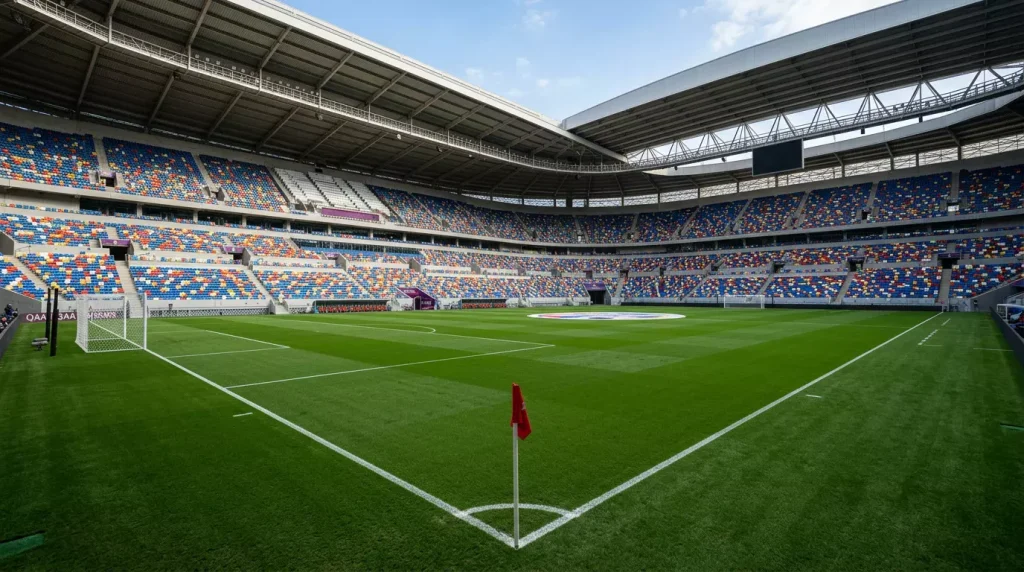
After nine years analyzing international football tournaments, I’ve heard every question imaginable about World Cup betting — from the basics that newcomers hesitate to ask to the edge cases that even experienced bettors encounter for the first time. World Cup 2026 introduces additional complexity through its unprecedented 48-team format, tri-nation hosting across the United States, Mexico, and Canada, and the expanded match schedule spanning 39 days. This FAQ compiles the questions I receive most frequently, updated specifically for the tournament’s unique characteristics and the Canadian legal betting environment.
General World Cup 2026 Questions
The 2026 World Cup breaks from every previous edition in ways that even longtime followers occasionally misunderstand. When my inbox fills with questions during the build-up to major tournaments, at least half concern basic format and scheduling details that the expanded structure has complicated. Here are the foundational questions that every bettor — regardless of experience level — should understand clearly before placing tournament wagers.
How does the 48-team World Cup format work?
The expanded 48-team format divides participants into 12 groups of 4 teams, with the top 2 finishers from each group advancing automatically to the knockout rounds along with the 8 best third-place finishers. This creates a Round of 32 as the first knockout stage, followed by Round of 16, quarterfinals, semifinals, and the Final. The tournament comprises 104 total matches played across 39 days from June 11 to July 19, 2026. Each team plays 3 group matches before potential elimination, identical to the previous 32-team format’s group stage structure.
Where will World Cup 2026 matches be played?
The tournament spans 16 stadiums across three countries: 11 venues in the United States hosting 78 matches, 3 venues in Mexico hosting 13 matches, and 2 venues in Canada hosting 13 matches. The opening match takes place at Estadio Azteca in Mexico City on June 11, 2026, while the Final occurs at MetLife Stadium in East Rutherford, New Jersey on July 19, 2026. Canadian venues — BMO Field in Toronto and BC Place in Vancouver — host all three Canada group stage matches plus additional fixtures.
Which teams have qualified for World Cup 2026?
As of the current qualification stage, the 48-team field includes automatic qualifiers (USA, Mexico, Canada as co-hosts) plus nations advancing through their confederation’s qualifying processes. The complete field was confirmed following the final qualification matches and playoff rounds in March 2026. Notable participants include defending champion Argentina, European heavyweights Spain, France, England, and Germany, South American powers Brazil, and tournament debutants Curaçao, Cape Verde, Uzbekistan, Jordan, and Bosnia and Herzegovina.
What is Canada’s World Cup 2026 group?
Canada was drawn into Group B alongside Switzerland (FIFA ranking 18), Qatar (FIFA ranking 56), and Bosnia and Herzegovina (FIFA ranking 71). Canada plays their opening match against Bosnia and Herzegovina at BMO Field in Toronto on June 12, faces Qatar at BC Place in Vancouver on June 18, and concludes group play against Switzerland at BC Place on June 24. The draw provides Canada with a realistic path to the knockout rounds, though Switzerland represents a formidable European opponent.
When does World Cup 2026 start and end?
The tournament runs from June 11 to July 19, 2026 — a 39-day competition window that exceeds the 2022 Qatar World Cup’s 29-day schedule. The extended duration accommodates the increased 104-match schedule while maintaining manageable rest periods between games. Group stage matches run from June 11-28, followed by knockout rounds through July 19. For Canadian viewers, matches will be scheduled primarily for afternoon and evening kickoffs in Eastern and Pacific time zones.
How many matches will be played at World Cup 2026?
The expanded 48-team format produces 104 total matches: 48 group stage matches (each team plays 3), plus 16 Round of 32 matches, 8 Round of 16 matches, 4 quarterfinals, 2 semifinals, a third-place playoff, and the Final. This represents a significant increase from the 64 matches played in the 32-team format, creating more betting opportunities and a longer tournament timeline for bankroll management considerations.
Betting Basics Questions
The questions that appear simple often prove most important. I’ve seen experienced bettors lose money because they assumed World Cup betting worked identically to club football or because they misunderstood how expanded formats affect market structures. The tournament’s uniqueness — occurring only every four years with constantly evolving team compositions — requires foundational understanding before advancing to sophisticated analysis.
What types of bets can I place on World Cup 2026?
Standard World Cup betting markets include outright winner (which nation lifts the trophy), group winner (which team tops each of the 12 groups), match result (1X2 — home win, draw, away win), Asian handicaps (spread betting), totals (over/under goals), both teams to score, correct score, first goalscorer, anytime goalscorer, halftime/fulltime, and numerous prop bets. Live in-play betting allows wagering during matches with odds that adjust in real time. The tournament also features futures markets for Golden Boot (top scorer), Golden Ball (best player), and various team advancement propositions.
What odds format is used in Canada?
Canadian sportsbooks predominantly display decimal odds (European format), where the number represents total return including stake. A 2.50 decimal odd means a $100 bet returns $250 total ($150 profit plus $100 stake). Some operators — particularly those with American parent companies — also offer American odds (+150 represents profit on a $100 stake, -200 means you must wager $200 to profit $100). Most platforms allow you to toggle between formats in settings. For World Cup 2026, I recommend using decimal odds for easier comparison across international sportsbooks and probability calculation.
How do I calculate implied probability from odds?
Implied probability converts betting odds to the percentage chance the market assigns to an outcome. For decimal odds, divide 1 by the odds and multiply by 100. A 3.50 decimal odd equals 28.6% implied probability (1 ÷ 3.50 × 100 = 28.6%). For American odds, divide 100 by (odds + 100) for positive odds, or divide the absolute value by (absolute value + 100) for negative odds. Understanding implied probability helps identify value bets where your assessed probability exceeds the market’s implied figure.
What is Asian handicap betting?
Asian handicaps eliminate the draw option by applying point spreads to match results. A -1.0 Asian handicap on Mexico means they must win by 2+ goals for your bet to win; a 1-goal victory refunds your stake. Quarter-goal handicaps (e.g., -0.75) split your stake between two adjacent lines. Asian handicaps offer better margins than traditional 1X2 markets and provide betting options when one side appears significantly stronger. For World Cup matches involving mismatches — like tournament favorites facing debutants — Asian handicaps often present more interesting betting structures than simple match results.
When should I place World Cup bets — before the tournament or during?
Both pre-tournament and in-tournament betting serve different purposes. Outright winner bets typically offer best value months before kickoff when uncertainty remains highest — odds on legitimate contenders may shorten significantly as the tournament approaches. Match betting during the tournament allows you to incorporate current form, injury news, and tactical observations that weren’t available earlier. My approach combines pre-tournament outright positions on selected value picks with match-by-match betting that responds to what I’m actually observing during the competition.
What is a parlay/accumulator bet?
A parlay combines multiple selections into a single bet where all picks must win for the bet to pay out. The odds multiply together, creating larger potential returns than single bets but requiring every selection to hit. A 3-team parlay at 2.00 × 2.00 × 2.00 pays 8.00 total — but if any single leg loses, the entire bet loses. For World Cup betting, parlays can combine matches across different days or different market types (e.g., combining a match result with a totals bet). The mathematical house edge increases with parlay size, making smaller parlays (2-3 legs) generally more sensible than larger accumulators.
Legal and Licensing Questions
Canada’s betting landscape evolved dramatically following Bill C-218’s passage in 2021, and the provincial regulatory frameworks continue developing as operators establish market presence. Questions about legal betting — particularly distinguishing licensed operators from offshore alternatives — dominate my inbox from Canadian readers approaching their first World Cup in the post-legalization environment.
Is online sports betting legal in Canada?
Yes. Bill C-218 legalized single-event sports betting in Canada, effective August 2021. Betting is regulated at the provincial level, meaning each province establishes its own licensing framework. Ontario operates the most developed private market through its iGaming Ontario (iGO) regulatory system, with dozens of licensed operators competing. Other provinces currently restrict online betting to provincial lottery corporations (BCLC in British Columbia, Loto-Québec in Quebec, AGLC in Alberta, etc.). Private operators in these provinces remain in a legal gray area, technically unlicensed but not actively prosecuted.
What is AGCO and how does it affect Ontario bettors?
The Alcohol and Gaming Commission of Ontario (AGCO) regulates the province’s online gaming market, which launched in April 2022. Licensed operators display AGCO registration and must comply with consumer protection requirements including responsible gambling tools, advertising restrictions, and financial security standards. For World Cup 2026, Ontario bettors should verify their chosen sportsbook holds AGCO registration — this ensures regulatory oversight, dispute resolution mechanisms, and segregated player funds. The AGCO’s public registry lists all currently licensed operators.
Can I bet on World Cup 2026 from Alberta or British Columbia?
Yes, through your province’s lottery corporation platforms (PlayAlberta in Alberta, PlayNow through BCLC in British Columbia). These provincial platforms offer World Cup betting markets including outright winners, match results, and various prop bets. Some bettors in these provinces also use offshore sportsbooks or Ontario-licensed platforms accessible via the internet, though these technically operate outside provincial regulatory frameworks. Alberta has announced plans for a private licensing regime similar to Ontario’s, potentially launching before World Cup 2026.
Are there betting restrictions during World Cup 2026?
Canadian regulations prohibit certain bet types regardless of operator. You cannot legally bet on age-restricted events (youth tournaments), on events where the outcome appears predetermined, or on events where you have insider information. Additionally, operators cannot accept bets from individuals under age 19 (18 in Alberta, Manitoba, and Quebec). For World Cup 2026 specifically, no Canada-specific restrictions exist beyond these general rules — you may bet on all matches including those involving the Canadian national team.
What responsible gambling resources are available?
All licensed Canadian sportsbooks must provide responsible gambling tools including deposit limits, loss limits, time limits, self-exclusion options, and access to support resources. ConnexOntario provides 24/7 problem gambling support at 1-866-531-2600. British Columbia offers the Responsible Gambling Council through BCLC platforms. The National Council on Problem Gambling maintains provincial resource directories. For World Cup 2026’s extended 39-day tournament, setting daily and weekly limits before the competition begins helps maintain healthy betting behavior across the event’s duration.
Odds and Markets Questions
World Cup markets differ from club football in ways that affect both strategy and value identification. The tournament’s unique characteristics — single-elimination pressure, neutral venues, four-year gaps between national team competitions — create market dynamics that confound bettors accustomed to weekly league analysis. These questions address the specific market structures you’ll encounter during World Cup 2026.
Who are the betting favorites to win World Cup 2026?
As of current market pricing, the top five favorites are Spain (approximately 5.50-6.00 odds), France (6.00-6.50), England (7.00-8.00), Argentina (8.00-9.00), and Brazil (9.00-10.00). These odds will shift as the tournament approaches based on injury news, qualifying form, and market activity. The defending champion Argentina, despite remaining among favorites, sees slightly longer odds than recent tournaments — normal regression pattern for aging squads with key players in career twilight years. Canada prices around 65.00-80.00, representing approximately 1.2-1.5% implied probability of lifting the trophy.
What is Golden Boot betting?
The Golden Boot market predicts the tournament’s top scorer. Odds depend on individual player quality, team advancement potential (deeper runs mean more scoring opportunities), penalty-taking duties, and historical tournament scoring patterns. For World Cup 2026, early favorites typically include Kylian Mbappé (France), Erling Haaland (Norway — if qualified and advanced), and Harry Kane (England). The expanded 48-team format potentially increases the winning goal total, as favorites face additional knockout matches against potentially weaker opposition.
How do group stage betting markets work?
Group stage markets include group winner (which team finishes top), group qualification (will a specific team advance), group stage points totals (over/under a team’s point accumulation), and exact group finishing position. Additionally, you can bet on individual group matches using standard 1X2, Asian handicap, and totals markets. For World Cup 2026’s 12-group structure, the 8 best third-place teams also advance, creating additional qualification markets not present in some previous formats. Group stage betting closes progressively as matches complete.
What happens to my bet if a match goes to extra time or penalties?
Standard match result (1X2), totals, and most prop bets settle based on 90-minute results — extra time and penalty outcomes do not affect these markets. Separate markets exist for “to qualify” or “to advance” that include extra time and penalty results. Some sportsbooks offer “including extra time” markets for knockout matches where standard rules don’t apply. Always verify settlement rules before placing knockout-stage bets; the difference between “90-minute result” and “to qualify” determines whether extra time affects your position.
Why do World Cup odds differ between sportsbooks?
Odds variation between operators reflects different margin structures, risk management approaches, and market maker philosophies. A sportsbook heavily exposed to Canada outright bets might shorten Canadian odds to limit liability, while less-exposed operators offer longer prices. For World Cup 2026, comparing odds across multiple licensed platforms before placing bets — a practice called line shopping — can significantly increase long-term returns. Price differences of 5-10% between operators for identical bets occur regularly, particularly in less liquid markets like group stage props or smaller-nation outright odds.
Canada-Specific Questions
The questions I receive most frequently from Canadian readers concern the home nation’s World Cup prospects and how to incorporate patriotic interest with sound betting strategy. The tension between supporting Canada and betting objectively creates decision points that warrant explicit address — particularly given this tournament represents the first men’s World Cup where Canada participates as both co-host and legitimate knockout-round contender.
What are Canada’s realistic chances at World Cup 2026?
Canada’s realistic ceiling appears to be Round of 16 advancement, with quarterfinal appearance possible under favorable circumstances. The Group B draw — Switzerland, Qatar, Bosnia and Herzegovina — provides a manageable path to knockout qualification, with home advantage at BMO Field and BC Place adding genuine edges. The betting markets price Canada’s group qualification at approximately 65-70% implied probability, which aligns with my independent assessment. Outright tournament victory remains extremely unlikely given squad depth limitations relative to European and South American powers.
Should I bet on Canada to win World Cup 2026?
From a pure expected-value perspective, Canada outright at 65.00+ odds represents long-shot betting where emotional attachment typically outweighs objective assessment. If you want Canada tournament exposure, consider markets offering better value: Canada to qualify from group (shorter odds, higher probability), Canada to top Group B (competitive odds against Switzerland), or individual match results where home advantage and opponent weaknesses create identifiable edges. The small “lottery ticket” outright bet isn’t necessarily wrong — just understand you’re betting hope rather than expectation.
Who are Canada’s key players for World Cup 2026?
Alphonso Davies (Bayern Munich left-back, world-class pace and attacking threat) and Jonathan David (prolific goal scorer in European competition) anchor Canada’s tournament hopes. Supporting cast includes Tajon Buchanan (versatile winger), Cyle Larin (experienced striker), and a defensive unit that showed improvement under Jesse Marsch’s tactical system. For betting purposes, Davies’ fitness and form represent the single most important variable in Canadian match projections — his presence transforms the side’s attacking capability and affects opponent tactical approaches.
When does Canada play at World Cup 2026?
Canada’s confirmed group stage schedule: June 12 vs Bosnia and Herzegovina at BMO Field, Toronto (3:00 PM ET); June 18 vs Qatar at BC Place, Vancouver (6:00 PM PT/9:00 PM ET); June 24 vs Switzerland at BC Place, Vancouver (3:00 PM PT/6:00 PM ET). If Canada advances from Group B, their Round of 32 match date and opponent depend on group finishing position and other results. The schedule provides built-in advantages — home venues, reasonable rest periods, and no extreme travel between matches.
For deeper analysis of Canada’s tournament outlook, the team profiles in our complete betting guide provide extended coverage of squad composition, tactical approaches, and match-by-match betting considerations throughout the group stage and potential knockout progression.
