
Parlay Betting at World Cup 2026: Strategies and Risks
 Available in US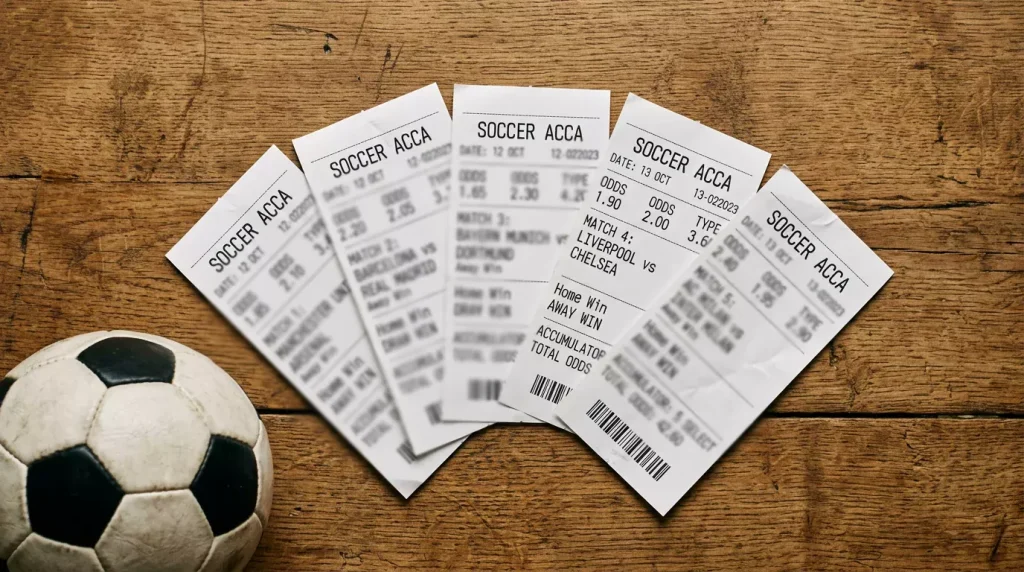
Four matches, four favourites, one massive payout. France beats Iraq. Spain beats Cape Verde. Brazil beats Haiti. Germany beats Curaçao. Each selection seems obvious — these heavyweights should crush debutants and longshots. A four-leg parlay combining these outcomes might price at 3.50 total odds, turning a $50 bet into $175. The math looks simple until you calculate how often four “sure things” actually all hit simultaneously. Parlay betting at World Cup 2026 offers the largest potential returns on small stakes but demands understanding of compounding probability that transforms apparent value into mathematical traps.
A parlay — called an accumulator in European markets — combines multiple individual bets into a single wager where all selections must win for any payout. The odds multiply: a three-leg parlay with selections at 1.50, 1.80, and 2.00 produces combined odds of 5.40 (1.50 × 1.80 × 2.00). That multiplication creates alluring payouts that obscure the corresponding probability collapse. Each added leg increases potential return while dramatically decreasing win likelihood.
What Is a Parlay Bet?
My first World Cup parlay was a disaster I remember vividly. Four matches, four favourites, four odds below 2.00 each. Greece versus Argentina, France versus Mexico, Brazil versus North Korea, Spain versus Switzerland — all from 2010. Argentina, France, Brazil, and Spain should stroll through. I bet $100 at combined odds around 4.00. Then Switzerland held Spain 1-0. My entire parlay died on what seemed like a routine result. That lesson cost $100 and purchased permanent skepticism about “easy” parlays.
Parlay construction starts with individual selections called legs. Each leg is a standard bet — moneyline, spread, total, or prop — that would normally stand alone. Combining legs into a parlay chains them together: if any leg loses, the entire parlay loses regardless of how other selections perform. A five-leg parlay where four legs win and one loses returns nothing. This all-or-nothing structure creates the risk-reward profile that attracts recreational bettors while giving sportsbooks their most profitable market.
Sportsbooks love parlays because compounding works against bettors. When you bet single games, the sportsbook edge (vigorish) applies once. When you combine legs, that edge multiplies with each addition. A single bet with 5% house edge becomes a three-leg parlay with roughly 15% combined house edge, assuming independent outcomes. The attractive payouts compensate for this mathematical disadvantage, but not fully — parlay expected value is typically negative even for skilled bettors who find edge on individual legs.
Correlated parlays deserve separate mention. If Canada beats Bosnia and Herzegovina, Jonathan David is more likely to score than if Canada loses. These outcomes correlate — one affects the other’s probability. Sportsbooks typically prohibit obvious correlations like combining match winner with player from that team to score. However, subtle correlations exist across the tournament that sharper bettors exploit within rules. First goal scorer combined with match winner when both reference different games is typically allowed despite logical connections between team quality and goal-scoring.
Parlay Pros and Cons
The allure is undeniable. Small stakes producing life-changing returns makes parlays the lottery ticket of sports betting. A $10 bet at 50.00 combined odds returns $500. That asymmetry between risk and potential reward attracts recreational bettors who want entertainment value from limited bankrolls. World Cup parlays intensify this appeal because the tournament concentrates meaningful matches into a short window, creating natural parlay construction opportunities.
Entertainment value genuinely justifies parlay betting for some. If your goal is maximizing excitement rather than expected profit, parlays transform casual viewing into engaged spectating. Each match within your parlay becomes personally consequential. The emotional rollercoaster of watching four legs hit before the fifth decides your fate creates memorable experiences that single bets cannot replicate. As entertainment expense — similar to buying tournament tickets — parlays can be justified even with negative expected value.
The mathematical disadvantage is substantial and unavoidable. Compounding sportsbook margins erodes expected value with each leg. A bettor finding 3% edge on single games loses that edge entirely when combining four or five legs. Even sophisticated models that identify mispriced lines cannot overcome the structural disadvantage that parlay multiplication creates. Long-term profit from parlay betting is possible only for bettors with exceptional single-game edge that survives compounding — a rare achievement.
Variance devastates bankrolls unprepared for cold stretches. A ten-leg parlay at 500.00 odds wins roughly once in 500 attempts assuming fair odds. Even with edge, you might place 200 ten-leg parlays before hitting. Can your bankroll survive 200 consecutive losses while waiting for the big score? Most cannot. This variance drives recreational bettors to parlay losses that exceed what single-game betting would produce over the same period.
Near-misses create psychological damage beyond financial loss. Hitting four of five legs feels agonizing despite mathematically representing a complete loss. That emotional response often triggers tilt betting — chasing losses with increasingly reckless parlays seeking to recover. The combination of high variance and emotional near-misses makes parlays dangerous for bettors without strict discipline and predetermined stop-losses.
Hedge opportunities partially mitigate parlay risk. If your four-leg parlay has three winners with one match remaining, you can bet against your final leg to guarantee profit regardless of outcome. This hedging sacrifices maximum payout for certain return. Sharp bettors calculate when hedging adds value versus when riding the final leg maximizes expected value. Tournament settings create natural hedge opportunities as parlays survive into later rounds.
Parlay Strategies for World Cup 2026
If you are going to bet parlays despite mathematical headwinds, strategic construction improves your position. Random leg combination produces random results. Thoughtful selection based on tournament dynamics creates parlays with higher hit rates than naive construction, though still with negative expected value in most cases.
Limit leg count ruthlessly. Two and three-leg parlays maintain reasonable win probability while still offering enhanced returns over single bets. Each leg beyond three dramatically decreases hit rate without proportional payout increase once sportsbook margins compound. A three-leg parlay at 4.00 combined odds wins roughly 25% of the time with fair pricing. A six-leg parlay at 16.00 combined odds wins roughly 6% of the time. The payout quadruples but win probability drops by more than four times.
Combine uncorrelated outcomes when possible. Mixing CONCACAF and UEFA group matches reduces correlation between legs. Canada beating Bosnia has no bearing on Spain beating Uruguay. Truly independent outcomes compound probability most predictably, helping you assess parlay likelihood accurately. Avoid combining matches where one result might influence another through schedule effects, travel, or bracket implications.
Target moderate favourites rather than extreme prices. Very short odds (below 1.40) offer minimal return per leg while still losing occasionally — Switzerland at 1.15 to beat Curaçao still loses perhaps 10% of the time. Very long odds (above 3.00) compress win probability too severely. Favourites priced between 1.60 and 2.20 balance reasonable single-leg win rates with meaningful odds contribution to combined payout.
Match timing creates parlay construction opportunities. World Cup 2026 features multiple matches daily during group stages, sometimes four or six matches on a single day. Same-day parlays allow you to watch all legs resolve without multi-day uncertainty. This structure appeals psychologically while not improving mathematical odds. Multi-day parlays spanning group stage completion can incorporate information from early matches into later leg selection.
Consider round-robin alternatives to straight parlays. A round-robin combines multiple parlays from the same selections — a four-team selection creates multiple two-leg and three-leg parlays that resolve independently. This structure reduces risk by allowing partial wins when some legs lose. The tradeoff: total stake increases since you are placing multiple parlays rather than one, and maximum payout decreases relative to a successful straight parlay.
The comprehensive World Cup betting guide addresses bankroll management principles that apply especially to parlay wagering.
Sample World Cup Parlays
Abstract strategy benefits from concrete examples. Here are hypothetical World Cup 2026 parlays constructed according to the principles outlined above. Note that actual odds will differ at bet placement — these illustrate construction logic rather than betting recommendations.
A conservative two-leg parlay might combine France to beat Iraq (hypothetical 1.25 odds) with Argentina to beat Jordan (hypothetical 1.30 odds). Combined odds: 1.63. A $50 bet returns $81.50 total. Both selections feature elite teams against debutants with significant talent gaps. The combined 61% implied win probability suggests hitting roughly three of five such parlays over time. Modest return compensates for modest risk.
A moderate three-leg group stage parlay could combine England to beat Ghana (1.55), Netherlands to beat Tunisia (1.65), and Portugal to beat DR Congo (1.50). Combined odds: 3.84. A $25 bet returns $96. Each leg features tournament-experienced favourites against African opponents whose World Cup history suggests struggle against European powers. The combined 26% implied probability means hitting roughly one in four such constructions.
An aggressive approach targeting knockout upsets might combine a draw in France versus Germany (hypothetical Round of 16, 3.30) with a draw in England versus Spain (hypothetical quarterfinal, 3.40). Combined odds: 11.22. A $10 bet returns $112.20. Both selections target elite matches where draws leading to extra time historically occur at elevated rates compared to group mismatches. The 9% combined probability means mostly losses, but occasional hits produce meaningful returns.
A thematic parlay based on home advantage could combine USA to beat Paraguay (1.70), Mexico to beat South Africa (1.60), and Canada to beat Bosnia (1.65). Combined odds: 4.49. A $20 bet returns $89.80. All three North American hosts benefit from home crowds and familiar conditions. The tournament structure ensuring home matches creates logical correlation that the market may not fully price into individual lines. Combined 22% probability means infrequent wins but reasonable frequency across multiple attempts.
A longshot entertainment parlay might combine Morocco to beat Brazil (6.50), Japan to beat Netherlands (4.50), and Senegal to beat France (7.00). Combined odds: 204.75. A $5 bet returns $1,023.75. Each selection represents a plausible upset by a team with recent tournament success against a favourite whose dominance is not assured. The 0.5% combined probability means this loses almost always — treat it as entertainment expense rather than investment.
Managing Parlay Risk at World Cup 2026
Bankroll discipline separates recreational losses from financial damage. Before the tournament begins, determine your total World Cup betting bankroll — money you can afford to lose entirely without affecting financial obligations. Allocate a specific percentage to parlay betting, perhaps 20-30% of total bankroll. When that parlay allocation exhausts, stop placing parlays regardless of perceived opportunities.
Stake sizing should reflect parlay volatility. If your total tournament bankroll is $500 and you allocate $150 to parlays, individual parlay stakes should rarely exceed $10-15. This sizing allows 10-15 parlay attempts, providing reasonable opportunity for variance to work in your favor while surviving the expected losses. Larger stakes on parlays accelerate bankroll depletion without meaningfully improving expected value.
Track results honestly. Record every parlay placed including legs, combined odds, stake, and outcome. After the tournament, calculate your parlay return percentage. Most bettors will find negative returns that quantify the entertainment cost. This data informs future tournament betting by revealing whether your construction approach shows promise or requires adjustment.
Resist chase betting after near-misses. Hitting three of four legs creates psychological urgency to immediately place another parlay seeking to recover potential winnings. This response leads to impulsive construction and inflated stakes that compound losses. If a near-miss frustrates you, step away from betting for that day. Return with clear analysis rather than emotional reaction.
Use live hedge opportunities when available. If your three-leg parlay survives to the final leg and guaranteed profit through hedging exceeds your typical single-game stake, consider locking in return. The choice between hedging and riding depends on your edge assessment of the final leg and your tolerance for the zero-return possibility. There is no universally correct answer — hedging suits risk-averse bettors while riding maximizes expected value for those confident in their final selection.
Remember that parlay losses are the expected outcome. Sportsbooks design parlay markets to generate profit for the house. You are not unlucky when parlays lose — you are experiencing the predicted result of negative expected value bets. Accepting this reality allows you to enjoy parlay betting as entertainment without the frustration of expecting profits that the mathematics does not support.
